


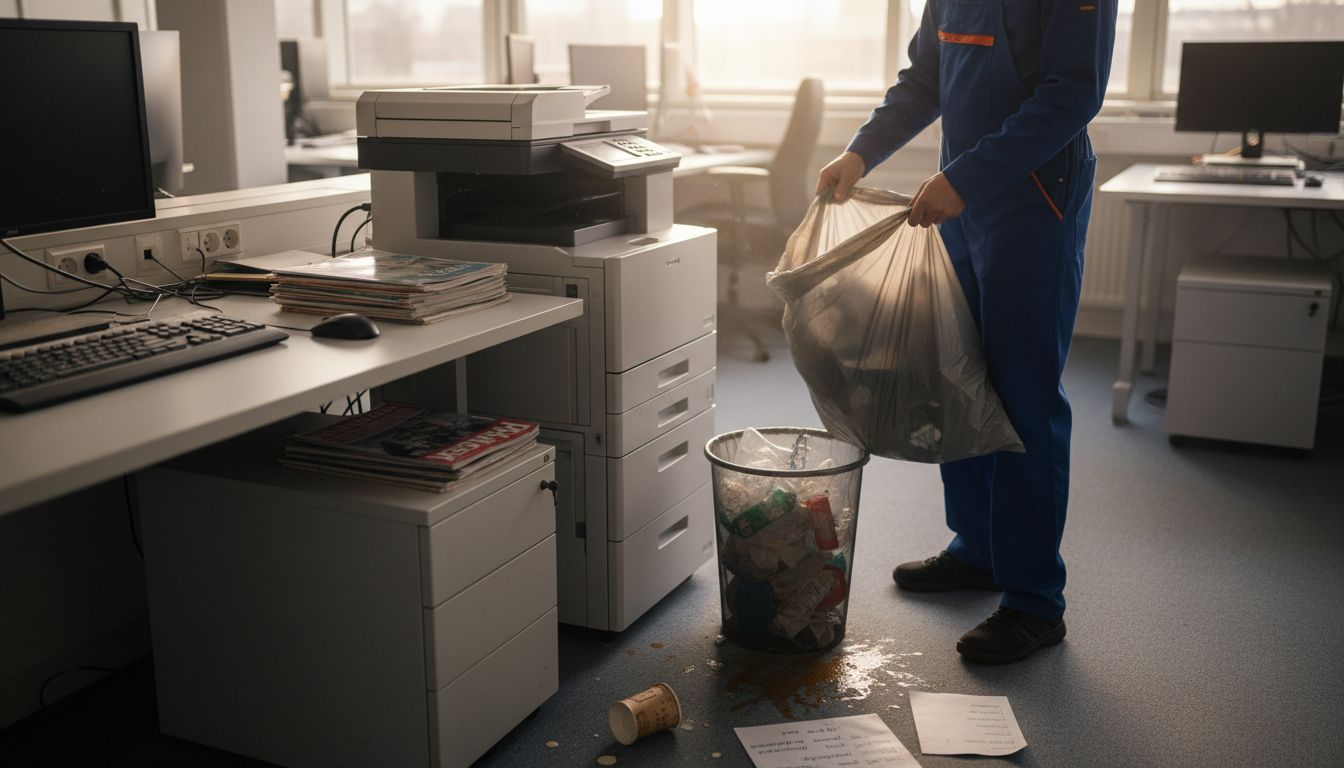
Plastic waste becomes a headache at the office faster than many teams realise. More and more companies are looking for smart ways to limit the use of plastic and at the same time make their company image more sustainable. Besides contributing to the environment, reducing plastic within companies also means direct cost savings and a stronger position in the labour market. This approach not only offers ecological benefits, it also strengthens your sustainable profile towards customers and employees.
Table of contents
- What reducing plastic means for companies
- Types of plastic use and their impact
- Environmental risks and the microplastics problem
- Laws and regulations on plastic reduction
- Costs, company image and competitive advantage
- Sustainable alternatives and practical solutions
Key points
| Point | Details |
|---|---|
| Plastic reduction is a strategic choice | Companies can develop sustainable alternatives and save costs by reducing their use of plastic. |
| Microplastics are an environmental problem | These small particles affect ecosystems and health, which means companies have to take measures. |
| Legislation encourages sustainability | The EU imposes obligations for plastic reduction strategies, which gives companies an extra push to replace plastic. |
| Sustainable alternatives offer opportunities | Investing in bio-based materials and reusable systems can deliver both economic benefits and customer loyalty. |
What reducing plastic means for companies
Reducing plastic is a strategic approach for companies that goes beyond environmental awareness. It is about systematically cutting back the use of plastic in all business processes and developing a more sustainable company culture.
Companies can reduce plastic by taking several concrete steps. Taking a critical look at your use of plastic is the first essential step in this process. This means a thorough analysis of all plastic flows within the organisation, from office supplies to packaging materials.
The main aspects of plastic reduction include:
- Taking stock of your current use of plastic
- Identifying plastic products that can be replaced
- Developing sustainable alternatives
- Working with suppliers that offer sustainable solutions
By reducing plastic, companies can not only lower their environmental impact but also achieve significant cost savings. It is about more than just being environmentally friendly: it is a smart business strategy that offers both economic and ecological benefits.
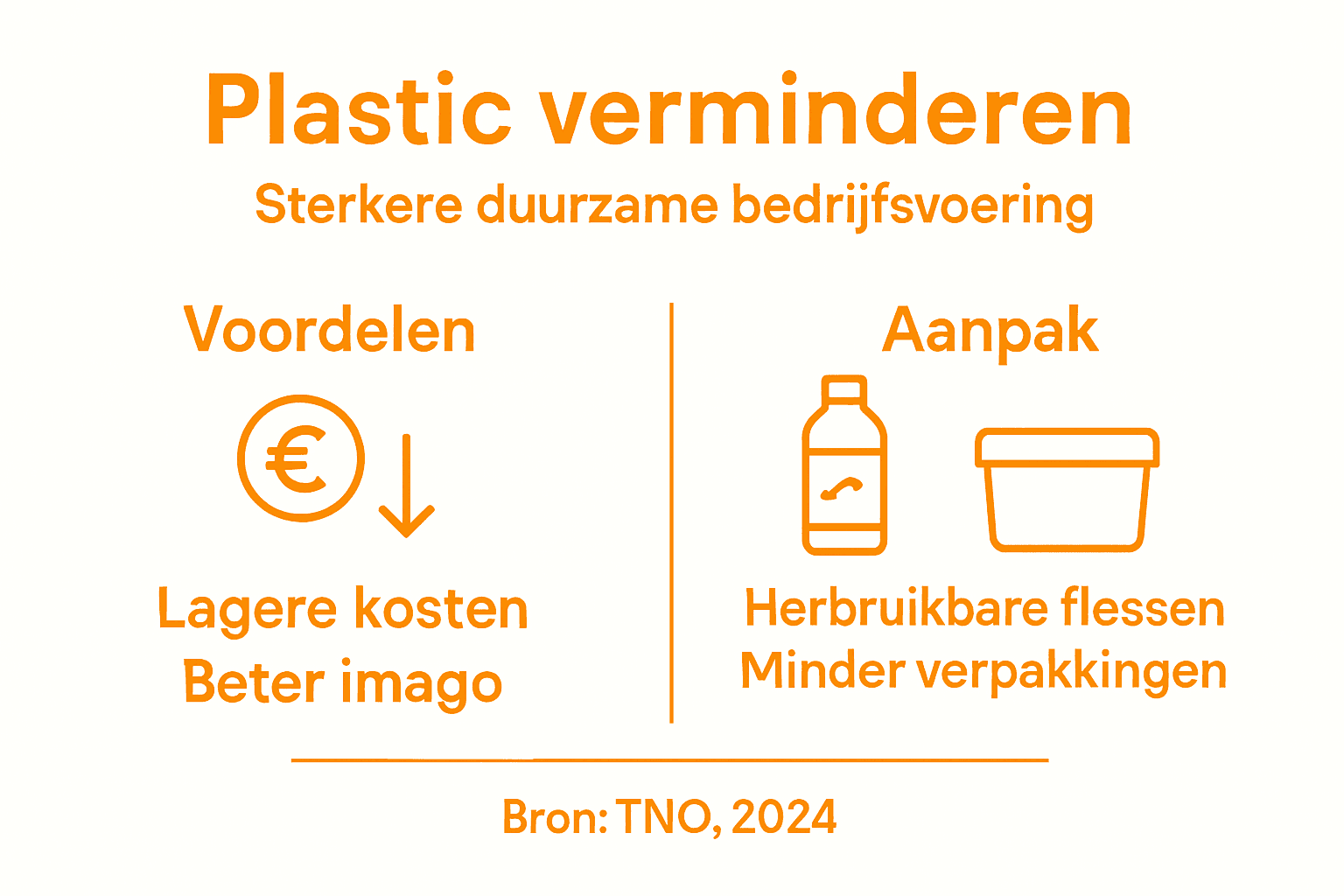
Pro tip: Start by replacing disposable plastic with reusable alternatives in your offices and meeting rooms.
Types of plastic use and their impact
Not all plastic is the same. There are different types of plastic use, each with its own impact on our environment. Industries distinguish several categories of plastic use that vary in composition and environmental effects.
The main types of plastic use are:
- Disposable plastic: Single-use products such as packaging and cutlery
- Everyday items: Durable plastic products such as office supplies
- Microplastics: Small plastic particles created by wear
- Industrial plastic: Materials used in production processes
Disposable plastic is a particularly big problem for the environment. It contributes significantly to litter and microplastics, which pose a serious threat to ecosystems. Car tyres, for example, are an unexpected but major source of microplastics, spreading small particles on every trip.
An overview of the main types of plastic and their environmental effects:
| Type of plastic | Examples | Environmental effects |
|---|---|---|
| Disposable plastic | Packaging, cups, cutlery | Major contribution to litter |
| Everyday materials | Reusable office supplies | Less waste, hard to recycle |
| Microplastics | Tyre wear, textiles | Pollution of water and food chains |
| Industrial plastic | Production machines, parts | Complex recycling, often a long lifespan |
Every type of plastic has a different environmental impact and requires a specific approach to reduction and recycling.
Companies can reduce plastic emissions by taking a critical look at the materials they use, choosing transparent packaging and preferring mono-material solutions that are easier to recycle.
Pro tip: Carry out a detailed analysis of all plastic flows in your organisation so you can reduce in a more targeted way.
Environmental risks and the microplastics problem
Microplastics are a complex and growing threat to our living environment. Scientists have shown that microplastics spread through air, water and soil, with far-reaching consequences for ecosystems and human health.
The main risks of microplastics include:
- Pollution of aquatic ecosystems
- Disruption of food chains
- Absorption of toxic substances
- Possible health risks for people and animals
Microplastics come not only from visible plastic waste, but also from unnoticed sources such as tyre wear, synthetic clothing and industrial processes. They hardly break down and can stay in the environment for years or even decades.
Every microscopic plastic particle is a potential risk to living organisms and can transfer harmful chemicals.
Fortunately, there are hopeful solutions. Research institutes such as TNO have calculated that we can reduce microplastic emissions by around 70% through smart material innovations, better collection systems and abolishing disposable plastic.
Pro tip: Invest in material innovations and consciously choose products that produce fewer microplastics.
Laws and regulations on plastic reduction
The European Union is strongly committed to laws and regulations that reduce plastic use. New legislation targets disposable plastic with the aim of tackling litter and encouraging sustainability.
The main legal measures include:
- A ban on free plastic cups for takeaway and delivery
- Mandatory producer responsibility
- Encouraging reuse and recycling systems
- Raising recycling rates
The Single Use Plastics Directive is at the core of these regulations. Business owners have to adapt by finding alternatives to disposable products and developing more circular business models.
Legislation forces companies to think actively about sustainable alternatives to plastic.
These new regulations force companies to take a critical look at their use of plastic and to develop innovative solutions that are both environmentally friendly and economically viable.
Pro tip: Stay ahead of legislation by proactively implementing sustainable alternatives.
Costs, company image and competitive advantage
Plastic reduction is more than an environmental measure: it is a strategic business choice with far-reaching economic implications. Investing in sustainability can attract new customers and at the same time deliver substantial cost savings.
The main benefits of plastic reduction include:
- Lower waste disposal costs
- A stronger company image
- Attracting conscious consumers
- Creating innovative competitive advantages
- Lower material costs in the long term
Although sustainable alternatives require higher investments at first, they offer strategic advantages. Companies that invest early in plastic reduction position themselves as innovative market leaders with a progressive social profile.
Sustainability is no longer an option, but an essential business strategy for future-proof business.
By proactively reducing plastic, companies can not only save costs but also significantly strengthen their market value and customer loyalty.
Pro tip: Build a detailed business case for plastic reduction that includes both direct cost savings and indirect benefits.
Sustainable alternatives and practical solutions
Companies have numerous options for replacing plastic with more sustainable alternatives. Material innovations offer promising solutions for cutting back plastic use and environmental impact.
Practical solutions for plastic reduction include:
- Reusable packaging and drinkware
- Bio-based materials
- Design-for-recycling concepts
- Concentrating products
- Introducing refill systems
- Good waste separation
The transition to sustainable alternatives calls for a strategic approach. Companies have to take a critical look at their entire supply chain and identify opportunities to replace plastic with more environmentally friendly materials.
Real sustainability starts with conscious choices in the use of materials and in product design.
By investing in innovative materials and circular business models, companies can significantly reduce their environmental footprint and strengthen their competitive position at the same time.
Below is a comparison of sustainable alternatives to using plastic:
| Alternative | Availability | Benefit for companies |
|---|---|---|
| Bio-based materials | Increasingly available | Lowers dependence on oil |
| Reusable systems | Can be implemented right away | Reduces waste and costs in the long term |
| Mono-material solutions | Emerging | Makes the recycling process easier |
| Refillable packaging | Growing trend | Increases customer loyalty |
Pro tip: Develop a phased approach to plastic reduction with concrete, measurable targets per quarter.
Strengthen sustainable business by reducing plastic the smart way
Reducing plastic is a crucial step in lowering your environmental impact and building a strong company image. This article made clear how important it is to take a critical look at your use of plastic and to choose reusable and recyclable materials. At FLASKE we understand that companies are looking for practical and sustainable solutions that save costs and contribute to a circular economy at the same time.
Our high-quality Water Bottles and Accessories are designed to drastically reduce the use of disposable plastic within your organisation.
Invest today in sustainable alternatives that are a perfect fit for your sustainability goals. Visit FLASKE and discover how our personalised stainless steel water bottles and coffee cups can help your company grow with respect for the environment. Take the step towards future-proof business now.
Frequently asked questions
What are the benefits of reducing plastic for companies?
Reducing plastic offers economic benefits, such as cost savings on waste disposal and a better company image. It also attracts conscious consumers.
How can I reduce plastic in my company?
Start by taking stock of your current use of plastic, replace disposable plastic with reusable alternatives and work with suppliers that offer sustainable solutions.
Which types of plastic have the biggest environmental impact?
Disposable plastic, such as packaging and cutlery, and microplastics, such as those created by wear of car tyres and synthetic clothing, are the biggest threats to the environment.
How can regulation encourage companies to reduce plastic?
New legislation, such as the ban on free disposable plastic, requires companies to find sustainable alternatives and to invest in recycling and reuse systems.