


Finding the right eco-friendly materials for corporate gifting can feel like navigating a maze of buzzwords and confusing claims. For many European office managers, the challenge is not just about ticking a sustainability box but making sure every choice genuinely supports green initiatives and measurable impact. This article breaks down what truly defines an eco-friendly material, clears up persistent myths, and highlights the real benefits—so your next gifting decision stands up to scrutiny and matches your commitment to a cleaner planet.
Table of Contents
- Eco-Friendly Materials Defined and Debunked
- Types of Sustainable Materials Used Today
- Benefits for Corporate Gifting Initiatives
- Compliance and Certification Standards in Europe
- Challenges and Pitfalls in Adoption
Key Takeaways
| Point | Details |
|---|---|
| Understanding Eco-Friendly Materials | Eco-friendly materials vary in sustainability, making it essential to differentiate between genuinely sustainable options and those merely marketed as such. |
| Evaluate Material Lifecycle | Assess the sourcing, end-of-life processing, and overall environmental footprint of materials to ensure they align with sustainability goals. |
| Strategic Procurement Practices | Adopt a circular economy mindset by focusing on durable, reusable items that minimize waste rather than single-use alternatives. |
| Certification and Compliance | Ensure eco-friendly gifts meet European certification standards to validate their environmental claims and maintain regulatory compliance. |
Eco-Friendly Materials Defined and Debunked
When you hear “eco-friendly materials” in corporate gifting conversations, you’re likely encountering a term that means different things to different people. The reality is more nuanced than marketing slogans suggest. Eco-friendly materials are products derived from renewable biological sources or designed to minimize environmental impact throughout their lifecycle, from production through disposal. This includes everything from bioplastics made from plant-based feedstocks to natural fiber composites woven from agricultural crops like jute, flax, hemp, and cotton. However, the term itself doesn’t guarantee sustainability, and that’s where confusion starts. A material might be biodegradable yet still generate significant carbon emissions during manufacturing. Another might decompose quickly but leave behind microplastics that persist in ecosystems for decades. Your procurement team needs to distinguish between genuinely sustainable options and those simply marketed as such.
Let’s address the most persistent misconceptions head-on. The first myth: all eco-friendly materials are expensive to produce and therefore cost prohibitive. While it’s true that some bioplastics and natural composites carry higher upfront costs, this gap is narrowing rapidly as production scales up across Europe. The second myth: these materials are inherently weaker or less durable than conventional alternatives. Natural fiber composites actually demonstrate competitive mechanical properties when properly engineered, though they do require surface treatments to address moisture sensitivity in certain climates. The third myth: if a material is biodegradable, it’s automatically eco-friendly. Here’s where it gets tricky. Bioplastics derived from renewable sources can reduce carbon footprints compared to petroleum-based plastics, but industrial composting infrastructure remains limited in many European regions. A material that biodegrades beautifully in a specialized facility becomes landfill-bound waste in regular disposal systems. The research shows that recycling limitations and high production costs remain genuine challenges for scaling these materials in corporate applications, not myths designed to discourage adoption.
When evaluating eco-friendly options for your company’s gifting program, focus on three concrete factors beyond the marketing language. First, verify the material’s sourcing. Does it come from renewable sources with sustainable farming practices, or is it simply recycled waste rebranded as innovative? Second, investigate the material’s end-of-life scenario. Can it be composted through your regional infrastructure, recycled through existing systems, or will it require specialized facilities your company can’t access? Third, assess the product’s actual environmental footprint, not just its material composition. A lightweight stainless steel drinking bottle, for example, lasts 10 to 15 years with minimal degradation, whereas a trendy compostable cup used once represents significantly higher lifecycle emissions per use. FLASKE’s personalized stainless steel bottles exemplify this approach by combining durability with recyclability, eliminating the false choice between functionality and environmental responsibility.
The circular economy concept matters here too. Instead of fixating on whether a single material is “eco-friendly,” smart procurement teams design gifting solutions around circular principles. A durable product that employees actually use for years, refill repeatedly, and eventually recycle creates far less environmental damage than a compostable item destined for landfills because the infrastructure to process it doesn’t exist locally. This shift in thinking moves beyond material selection into product strategy, which explains why European companies increasingly invest in long-lasting, reusable corporate gifts rather than trendy single-use alternatives.
Pro tip: Request lifecycle assessment (LCA) documentation from suppliers when evaluating eco-friendly materials, not just marketing claims. LCAs quantify actual environmental impact across production, transportation, use, and disposal phases, providing the data foundation you need to align gifting decisions with your company’s sustainability goals.
Types of Sustainable Materials Used Today
Your company has options. Real, practical options that move beyond theoretical sustainability into tangible corporate gifting solutions. The materials landscape has evolved dramatically over the past five years, and what was once niche is now mainstream across European procurement departments. The most commonly adopted sustainable materials fall into distinct categories, each with specific advantages that align differently with various corporate goals. Understanding these categories helps you make informed decisions rather than defaulting to whatever arrives in the latest supplier pitch.
Natural Plant-Based Materials form the foundation of today’s eco-friendly gifting. Bamboo stands out as perhaps the fastest-growing renewable resource, achieving maturity in three to five years compared to decades for traditional timber. Cork, harvested from tree bark without felling the tree, offers durability and natural water resistance, making it ideal for coasters, desk accessories, and protective packaging. Organic cotton and other natural fibers provide breathability and biodegradability while avoiding synthetic pesticides used in conventional textile production. Jute and hemp represent agricultural byproducts that would otherwise become waste, transforming farming residue into functional materials. Eco-friendly corporate gifts commonly leverage these plant-based options for everything from branded tote bags to desk accessories, appealing directly to employees who understand the environmental story behind their gifts.

Recycled Materials deserve separate mention because they address a fundamentally different sustainability principle. Recycled paper and cardboard reduce demand for virgin fiber, conserving forests and requiring significantly less water and energy compared to new production. Recycled metals like aluminum reclaim value from existing waste streams, requiring only five percent of the energy needed to produce virgin aluminum. Recycled plastics transform post-consumer waste into new products, closing loops that would otherwise send materials to landfills. The key advantage here is that recycled materials work within existing industrial infrastructure. Your region likely already has collection and processing systems for these materials, meaning end-of-life management doesn’t depend on future facilities that might not materialize. Stainless steel, particularly when sourced from recycled content, represents a hybrid approach that combines durability with circular economy principles. FLASKE’s personalized stainless steel drinkware exemplifies this category by offering indefinite reusability and full recyclability at end-of-life, eliminating the uncomfortable choice between attractive gifting and genuine environmental responsibility.
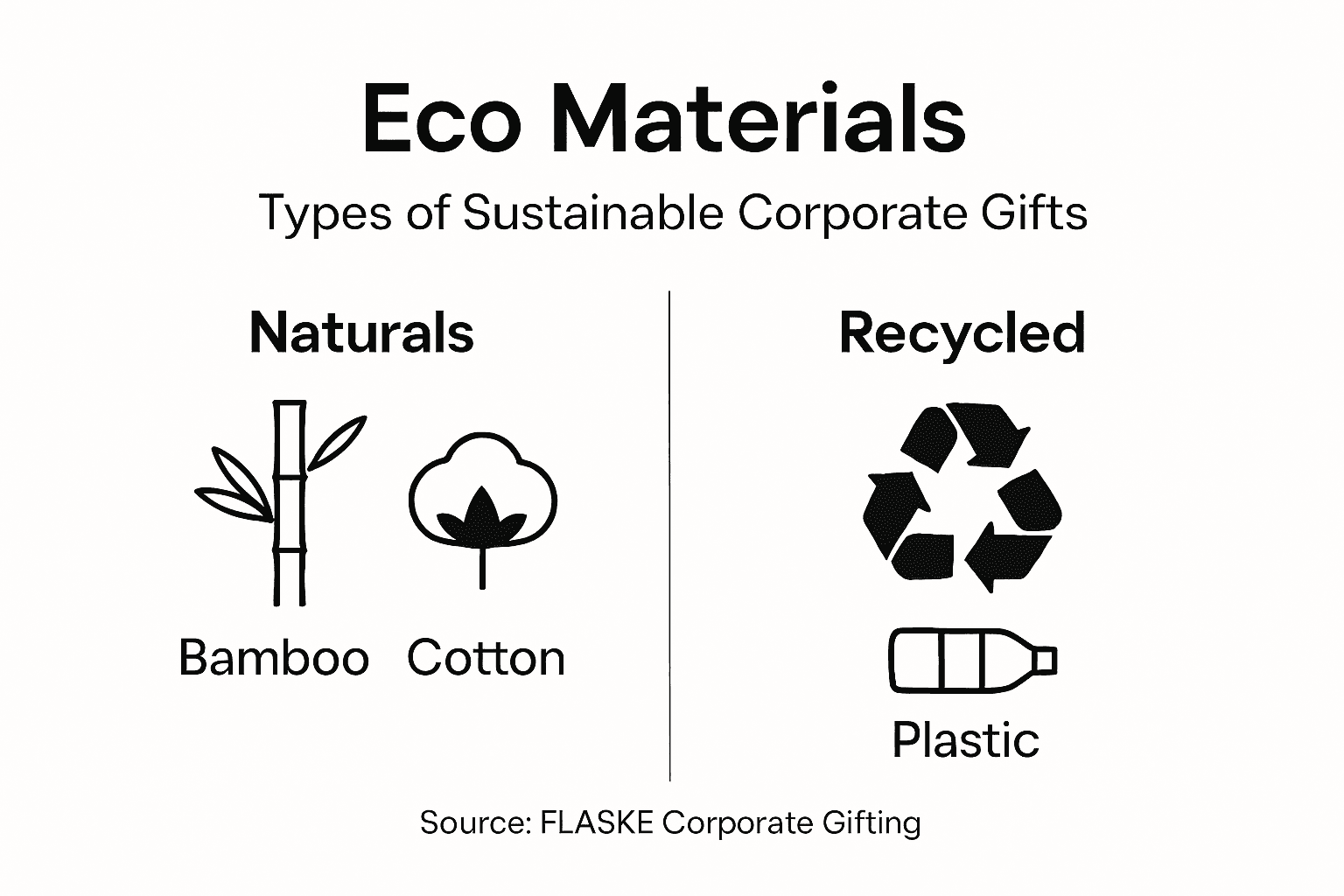
Biodegradable and Compostable Alternatives complete the spectrum, though with important caveats. Biodegradable plastics derived from plant sources like corn or sugarcane break down faster than conventional petroleum-based plastics, though this varies dramatically depending on composting conditions. Plantable gifts containing seed paper or embedded seeds appeal to employees’ emotional connection with nature and actually return value to the environment. However, remember the infrastructure challenge from the previous section: many of these materials require industrial composting facilities that aren’t universally available across Europe. Your procurement team should verify local processing capacity before committing to large quantities of compostable materials.
Here’s what separates strategic thinking from reactive procurement. Don’t simply choose the material that sounds most environmental. Instead, match the material to your company’s actual circumstances. If your office produces regular paper waste with established recycling systems, recycled paper products make obvious sense. If employees consistently use drinkware and carry bags daily, durable reusable items in stainless steel or organic cotton generate more total environmental benefit than compostable items used once. If your gifting budget emphasizes branded merchandise with longer shelf lives, bamboo or cork accessories outperform materials that biodegrade if stored incorrectly.
Pro tip: Request samples from three different suppliers in your preferred material category, then track which items employees actually use and retain after six months. Usage data reveals whether your chosen material truly aligns with your workforce’s needs better than any sustainability marketing ever could.
Here’s a concise comparison of popular sustainable material categories for corporate gifts:
| Material Type | Key Benefit | Best Use Case | Infrastructure Needs |
|---|---|---|---|
| Plant-Based (Bamboo, Cork) | Rapid renewability | Daily use accessories | Minimal, often compostable |
| Recycled (Paper, Metal) | Lowest resource consumption | Packaging, drinkware | Existing recycling systems |
| Biodegradable/Compostable | Returns nutrients to nature | Event giveaways, plantable gifts | Often requires industrial composting |
| Durable (Stainless Steel) | Long operational lifespan | Personalized bottles, bags | Recycling facilities needed |
Benefits for Corporate Gifting Initiatives
Sustainable corporate gifting isn’t just a feel-good initiative. It’s a strategic business decision that delivers measurable returns across multiple dimensions. When your company distributes eco-friendly gifts, you’re making a public statement about organizational values while simultaneously influencing how employees, clients, and stakeholders perceive your brand. The benefits extend far beyond the moment someone receives the gift and far deeper than traditional marketing achievements. Understanding these benefits helps justify the investment to finance teams and board members who rightfully ask for concrete reasons to shift procurement practices.
The most immediate benefit touches your company’s environmental footprint. By selecting gifts made from renewable, recycled, or biodegradable materials, you reduce the carbon emissions associated with your corporate recognition programs. This reduction compounds over time as your company distributes hundreds or thousands of gifts annually. A typical corporate gifting program might involve sending items to client prospects, employee anniversaries, conference attendees, and seasonal recognition. If each of those gifts shifts from conventional materials to sustainable alternatives, the aggregate environmental impact becomes genuinely substantial. For European office managers concerned with meeting European Union sustainability targets, this direct impact demonstrates tangible progress toward corporate environmental goals. Moreover, sustainable gifting often involves products with longer operational lifespans. A stainless steel drinkware item used daily for years generates far less total environmental cost than disposable alternatives replaced frequently. This durability advantage means your gifting investment aligns with circular economy principles rather than contributing to the linear extraction-consumption-disposal cycle.
The brand reputation advantage operates on a different level entirely. Employees receiving durable, thoughtfully designed eco-friendly gifts develop stronger positive associations with their employer. They’re more likely to recommend the company as a place to work, which directly reduces recruitment costs and improves talent acquisition quality. External stakeholders, particularly eco-conscious consumers and business partners, notice when companies demonstrate environmental commitment through concrete actions rather than surface-level messaging. This authentic commitment strengthens client relationships built on shared values. Sustainable corporate gifting initiatives align with CSR and ESG goals, reinforcing the long-term positive brand impact that increasingly influences investment decisions, partnership opportunities, and customer loyalty. When procurement departments specify sustainable materials, they signal organizational authenticity that marketing departments cannot fabricate through campaigns alone. Clients and employees recognize the difference between companies that talk about sustainability and companies that embed it into operational decisions like gift selection.
Financial benefits often surprise office managers initially encountering sustainable gifting. Long-term cost savings emerge from product durability and reduced replacement cycles. Employees who receive a high-quality personalized stainless steel bottle use it for years, creating repeated brand exposure at a fraction of the cost required to produce that visibility through advertising. Sustainable materials increasingly achieve price parity with conventional alternatives as production scales, eliminating the premium cost barrier that discouraged adoption five years ago. Additionally, supporting eco-friendly businesses through sustainable gifting procurement creates supply chain relationships that often deliver better service, reliability, and customization than conventional suppliers operating on thin margins. Employee engagement metrics consistently show measurable improvements when workforce recognition programs emphasize environmental values through gift selection. Engagement translates directly into productivity, retention, and reduced management overhead costs.
Here’s what ties everything together. Sustainable corporate gifting represents a convergence point where environmental responsibility, brand strategy, employee relations, and financial performance align. You’re not choosing between these benefits or sacrificing one for another. A single decision to select personalized stainless steel drinkware from FLASKE simultaneously reduces environmental impact, strengthens brand reputation among eco-conscious stakeholders, improves employee perception of company values, demonstrates CSR alignment, and often delivers better long-term cost performance than conventional alternatives. This convergence explains why sustainability-focused office managers across Europe increasingly view eco-friendly gifting not as an additional expense but as strategic procurement that optimizes multiple organizational objectives simultaneously.
Pro tip: Track three metrics for your first sustainable gifting initiative: environmental impact reduction (calculated through lifecycle assessment), employee engagement feedback (gather through brief post-gift surveys), and cost per year of product use (compare total expense divided by expected lifespan). These data points transform sustainability from aspirational messaging into measurable business value that justifies continued investment.
Compliance and Certification Standards in Europe
Compliance and certification matter more in Europe than almost anywhere else on the planet. This isn’t bureaucratic red tape. It’s the infrastructure your company needs to confidently purchase eco-friendly corporate gifts knowing they meet actual environmental standards rather than marketing claims. European regulations take sustainability seriously, and that rigor protects both your company and the environment. The certification landscape can feel overwhelming at first, but breaking it down into recognizable standards makes procurement decisions significantly simpler. Your compliance obligations depend partly on where your company operates, which markets you’re supplying to, and which specific materials you’re purchasing, but understanding the major certification frameworks gives you the foundation needed for informed decision-making.
The primary certifications you’ll encounter across European corporate gifting involve forest management and materials sourcing. The Forest Stewardship Council (FSC) certifies wood and paper products, ensuring they come from responsibly managed forests where harvesting doesn’t exceed sustainable yield rates. The Programme for the Endorsement of Forest Certification (PEFC) serves a similar function with slightly different audit criteria, and both are equally recognized across Europe. The Blue Angel certification extends beyond forest products to encompass broader environmental criteria, including low toxicity standards for inks, dyes, and surface treatments commonly used in branded merchandise. When you specify gifts made from FSC-certified cardboard packaging or PEFC-labeled wooden accessories, you’re providing documentary proof that these materials meet stringent European standards. Eco-labels such as FSC, PEFC, and Blue Angel enhance brand credibility and demonstrate to stakeholders that your procurement team conducts genuine due diligence rather than accepting unverified supplier claims. Additionally, sustainable packaging design with minimal material use and non-toxic inks contributes directly to certification compliance, meaning your gifting strategy needs to address not just the product itself but the entire presentation package.
Beyond material-specific certifications, broader environmental management certifications provide comprehensive assurance. Independent audits verify compliance with strict standards on sustainability, ethical sourcing, and traceability through organizations like Ecocert, which issues certifications ensuring environmentally and socially responsible practices in product manufacturing across entire supply chains. These certifications require manufacturers to document their environmental practices, conduct regular independent audits, and maintain transparent records demonstrating compliance. This level of verification means you’re not relying on supplier marketing departments to define what “sustainable” means. The certifying body has actually examined facilities, reviewed material sourcing practices, and verified claims through site visits and documentation review. For European office managers navigating complex procurement environments, these third-party certifications transfer verification burden from internal teams to recognized external authorities. When a supplier provides Ecocert certification or similar credentials, you gain confidence that independent experts have validated their claims.
Navigating these certifications requires understanding which apply to your specific gifting materials. Stainless steel drinkware products don’t require FSC certification (they’re metal, not forest products), but they should come from manufacturers with ISO 14001 environmental management certification or equivalent standards demonstrating systematic environmental responsibility. Organic cotton merchandise needs certification proving the cotton was grown without synthetic pesticides and meets standards from organizations like the Global Organic Textile Standard (GOTS). Recycled materials require documentation of recycled content percentage and proof that collection and processing followed established waste management standards. Your procurement approach should specify required certifications as part of supplier qualification, rather than discovering compliance gaps after placing orders. This means incorporating certification requirements into your request for proposal specifications and making certification documentation mandatory before finalizing purchases.
The regulatory landscape continues evolving across Europe as the European Union strengthens sustainability requirements. The Digital Product Passport initiative will eventually require detailed environmental information about products, including corporate gifts. The Corporate Sustainability Reporting Directive (CSRD) expands requirements for companies to report on supply chain environmental impact, which directly includes corporate gifting procurement. These emerging regulations mean that compliance requirements you face today represent minimum standards that will likely become more stringent. Building procurement practices around recognized certifications now positions your company ahead of future regulatory changes rather than forcing reactive scrambling when new requirements take effect.
Pro tip: Request certification documentation alongside product samples during supplier evaluation, then verify certificates directly with issuing organizations rather than relying solely on supplier-provided documentation. A simple email to FSC or PEFC headquarters confirming a supplier’s certification status eliminates the small percentage of fraudulent certifications that circulate in corporate procurement.
Below is a summary of major European sustainability certifications relevant for gifting materials:
| Certification | Primary Focus | Typical Materials Covered | Verification Method |
|---|---|---|---|
| FSC | Responsible forestry | Wood, paper, cardboard | Chain-of-custody audits |
| PEFC | Sustainable forest management | Wood, paper, packaging | Independent audits |
| Blue Angel | Broader environmental criteria | Inks, dyes, finished products | Product testing and documentation |
| Ecocert | Environmental and social responsibility | Textiles, manufacturing | Facility inspections, records review |
| GOTS | Organic textiles | Cotton, natural fiber goods | Producer certifications |
Challenges and Pitfalls in Adoption
Adopting eco-friendly materials in corporate gifting sounds straightforward until you actually attempt implementation. Reality introduces friction that marketing materials conveniently ignore. Your procurement team will encounter genuine obstacles that require strategic problem-solving rather than simple willpower. Understanding these challenges ahead of time prevents costly mistakes and keeps adoption initiatives moving forward despite predictable resistance. The obstacles fall into distinct categories, each demanding different solutions. Some challenges involve supply chain limitations. Others stem from cost structures or employee perception gaps. A few emerge from internal organizational friction that has nothing to do with sustainability itself. Recognizing which category you’re facing determines whether you need supplier negotiations, budget reallocation, stakeholder communication, or simply time to allow market conditions to evolve.
Supply chain constraints represent the most immediate practical challenge. Many European suppliers don’t maintain inventory depth in sustainable materials, meaning large gifting orders face extended lead times or minimum purchase quantities that strain budgets. A company wanting to send personalized gifts to 5,000 conference attendees discovers that sustainable alternatives require six-month lead times compared to two weeks for conventional products. This timing mismatch forces uncomfortable choices between sustainability goals and operational deadlines. Additionally, customization options often lag behind conventional products. You might find sustainable coffee cups available in three color options when your brand guidelines require six. Eco-friendly packaging materials sometimes lack the print quality or durability needed for premium gifting programs, creating tension between environmental goals and brand perception standards. These constraints aren’t permanent. The market continues expanding, suppliers are scaling production capacity, and customization options improve annually. However, your company faces these limitations today, not in the hypothetical future. The solution involves starting adoption with longer planning horizons and simpler products, then expanding complexity as supplier capabilities grow.
Cost structures create another predictable challenge. While sustainable materials increasingly achieve price parity with conventional alternatives, premium positioning persists in specific categories. A personalized stainless steel bottle costs more upfront than plastic alternatives, even though lifecycle costs favor the durable option. Finance teams accustomed to evaluating gifting expenses through unit cost rather than total cost of ownership sometimes block sustainable options based on incomplete financial analysis. Additionally, sustainable materials often require different manufacturing processes, tooling investments, or smaller production runs that currently attract price premiums. Recycled plastic manufacturing, for instance, involves sorting and processing steps absent from virgin plastic production. These process differences justify higher pricing today, but they represent temporary market immaturity rather than permanent economic disadvantage. The pitfall emerges when procurement teams accept unit cost comparisons without presenting lifecycle analysis or environmental impact quantification. A slightly higher upfront expense becomes justified when you account for durability, reusability, and avoided environmental costs.
Employee perception presents a subtler but equally important challenge. Workers sometimes view eco-friendly gifts as cost-cutting measures disguised as sustainability initiatives. A durable stainless steel bottle strikes some employees as cheaper than trendy branded merchandise, even though quality and longevity argue otherwise. This perception gap undermines the brand reinforcement that justifies gifting investments. The solution requires communication strategy alongside product selection. Explain material choices, durability advantages, and environmental impact through gift packaging, accompanying cards, or internal communications. Show employees the story behind the gift rather than assuming the sustainable choice speaks for itself. FLASKE’s personalized drinkware approach addresses this by combining aesthetics with functionality and sustainability, eliminating the false choice between attractive gifts and responsible sourcing.
Organizational inertia represents the final major pitfall. Procurement processes developed over years often specify conventional materials by default. Changing these defaults requires effort, stakeholder buy-in, and process documentation updates. Budget allocations sometimes assume conventional pricing. Policy language might explicitly restrict purchases to lowest-cost options without lifecycle analysis considerations. Supply chain relationships with conventional suppliers run deep, and switching introduces relationship disruption that some departments resist. These institutional barriers have nothing to do with sustainability itself. They reflect organizational momentum and the friction inherent in changing established practices. Overcoming this requires executive sponsorship, clear policy updates, updated procurement templates, and communication that frames sustainable gifting as strategic evolution rather than radical departure.
The most dangerous pitfall combines multiple challenges into paralysis. Companies recognize obstacles and abandon adoption entirely rather than tackling them sequentially. The better approach acknowledges challenges while implementing anyway, starting with manageable projects that build internal capability and demonstrate success. A pilot program gifting 500 employees with eco-friendly drinkware generates learnings about lead times, customization options, and employee reception. Success with this limited scope builds momentum for expanding to client gifts, conference merchandise, and other categories. Each successive project encounters fewer obstacles because your organization has already solved initial problems and supplier relationships have matured.
Pro tip: Start your sustainable gifting adoption with categories featuring the strongest supplier ecosystems and longest planning timelines, not your most time-sensitive or complex gifting needs. Pilot programs with manageable scale (under 1,000 units) accumulate learning and build internal support before attempting enterprise-wide transitions.
Choose Truly Sustainable Corporate Gifts That Make a Difference
The article highlights how challenging it can be to navigate the confusing landscape of eco-friendly materials in corporate gifting. From verifying sourcing and lifecycle impacts to overcoming supply chain and cost barriers it is clear that companies need reliable, durable solutions that truly align with sustainability goals. If you want to avoid pitfalls like limited local composting infrastructure or expensive, short-lived gifts, consider products designed around circular economy principles and proven certifications.
FLASKE offers personalized stainless steel drinkware built for long-term use and recyclability. These bottles and coffee cups help you reduce carbon footprints while delivering quality gifts your employees and clients will appreciate daily. By choosing sustainable materials with documented environmental benefits and pairing them with trusted suppliers you transform corporate gifting into a powerful statement of your brand values and commitment to responsible procurement.
Elevate your gifting strategy today with durable, customizable, and eco-friendly options that overcome common adoption challenges.
Explore our sustainable drinkware and make your next corporate gift a lasting symbol of true environmental responsibility.
Discover FLASKE solutions now to create gifts that combine functionality with authenticity.
Learn how personalized stainless steel bottles support circular economy and start your sustainable gifting journey with confidence.
Take the next step toward eco-conscious corporate gifting that your team and planet will thank you for.
Frequently Asked Questions
What are eco-friendly materials in corporate gifts?
Eco-friendly materials are products derived from renewable biological sources or designed to minimize environmental impact throughout their lifecycle, from production to disposal. This includes bioplastics, natural fiber composites, and materials like bamboo, cork, and recycled options.
How can I ensure that the eco-friendly materials I choose are genuinely sustainable?
To ensure the sustainability of eco-friendly materials, verify their sourcing, investigate the end-of-life scenarios (such as recyclability or compostability), and assess the actual environmental footprint rather than just relying on marketing claims.
What are the benefits of using sustainable materials for corporate gifting?
Using sustainable materials for corporate gifting reduces environmental impact, enhances brand reputation, and often leads to long-term cost savings due to durability and reduced replacement cycles. It also aligns with corporate social responsibility (CSR) and environmental, social, and governance (ESG) goals.
What should I consider when choosing between biodegradable and durable materials for corporate gifts?
When choosing between biodegradable and durable materials, consider the product’s expected use, the local infrastructure for processing biodegradable materials, and the overall lifecycle impact. Durable items like stainless steel can often provide greater environmental benefits over time compared to single-use biodegradable products.
Recommended
- 5 Reasons To Give Sustainable New Year Corporate Gifts – Flaske
- Sustainable Corporate Gifts: Why Your Business Gifts Should Be Green – Flaske
- Why You Should Consider Reusable Water Bottles as Eco-Friendly Corpora – Flaske
- Consider Branded Water Bottles as Corporate Christmas Gifts This Year – Flaske


