


Running an office in North America often means juggling day-to-day operations with evolving sustainability goals. The push for eco-friendly business strategies matters not only for reducing environmental impact but also for building lasting competitive benefits through responsible practices. This guide highlights actionable approaches such as renewable energy adoption and waste minimization, empowering office managers to support corporate social responsibility while achieving real operational gains.
Table of Contents
- What Are Eco-Friendly Business Strategies?
- Types of Sustainable Office Practices
- Energy Efficiency and Waste Reduction Methods
- Integrating Green Procurement and Products
- Employee Engagement and Sustainability Culture
- Costs, ROI, and Common Pitfalls to Avoid
Key Takeaways
| Point | Details |
|---|---|
| Eco-Friendly Strategies | Organizations should integrate sustainable practices to minimize environmental impact while enhancing operational efficiency. |
| Employee Engagement | Involving employees in sustainability efforts fosters a culture of responsibility and innovation within the workplace. |
| Financial Benefits | Sustainability initiatives lead to cost savings, enhanced brand reputation, and access to new market opportunities. |
| Holistic Implementation | Successful sustainability strategies require a comprehensive approach that aligns eco-goals with organizational objectives and continuous performance monitoring. |
What Are Eco-Friendly Business Strategies?
Eco-friendly business strategies represent systematic approaches organizations use to minimize environmental impact while maintaining operational effectiveness. These comprehensive frameworks integrate sustainable practices across business operations, focusing on reducing carbon footprints, conserving resources, and creating long-term environmental value.
At their core, eco-friendly business strategies involve strategic interventions that transform traditional business models into more sustainable frameworks. Systematic sustainability policies enable firms to adopt renewable energy sources, implement waste reduction techniques, and embed sustainable innovation throughout their organizational processes.
Key components of effective eco-friendly business strategies include:
- Renewable energy integration
- Waste minimization protocols
- Circular economy design principles
- Carbon emissions tracking and reduction
- Sustainable supply chain management
- Green technology investments
Government regulations and policy frameworks play a critical role in driving these strategies forward. Green business policy mechanisms provide incentives, establish emissions limits, and create supportive environments that encourage businesses to adopt more sustainable practices.
Businesses implementing these strategies not only reduce environmental impact but also gain competitive advantages. Sustainable practices can lower operational costs, attract environmentally conscious customers, and position companies as responsible corporate citizens committed to global ecological preservation.
Here’s a quick comparison of common eco-friendly business strategies and how they drive organizational benefits:
| Strategy Type | Main Focus | Example Outcomes | Competitive Advantage |
|---|---|---|---|
| Renewable Energy Integration | Lower carbon footprint | Reduced energy bills, better branding | Differentiates as sustainable leader |
| Circular Economy Principles | Resource efficiency | Less waste, closed-loop systems | Innovation in product life cycles |
| Green Technology Investment | Process improvement | Automated tracking, smart controls | Enhanced operational efficiency |
| Sustainable Supply Chains | Vendor sustainability | Eco-certified suppliers, local sourcing | Resilient and responsible sourcing |
Pro tip: Start by conducting a comprehensive environmental audit to identify your organization’s current sustainability gaps and prioritize strategic interventions.
Types of Sustainable Office Practices
Sustainable office practices represent strategic approaches organizations implement to reduce environmental impact while maintaining workplace efficiency. These comprehensive strategies transform traditional work environments into more eco-conscious spaces that prioritize resource conservation and minimize ecological footprints.
Sustainable office strategies encompass a wide range of practical interventions designed to create more environmentally responsible workplaces. These approaches integrate multiple dimensions of sustainability, from energy management to waste reduction and employee engagement.
Key sustainable office practices include:
-
Energy Efficiency Measures
- Installing LED lighting
- Using smart power strips
- Implementing automated temperature controls
- Maximizing natural lighting
-
Waste Reduction Strategies
- Comprehensive recycling programs
- Eliminating single-use plastics
- Promoting digital documentation
- Implementing composting systems
-
Resource Conservation Techniques
- Shared equipment usage
- Remote work options
- Sustainable procurement practices
- Water conservation protocols
Green workplace initiatives not only reduce environmental impact but also enhance corporate reputation and employee well-being. By creating a culture of sustainability, businesses can attract environmentally conscious talent and demonstrate corporate social responsibility.
Moreover, these practices offer significant financial benefits. Reduced energy consumption, minimized waste management costs, and improved operational efficiency translate into tangible economic advantages for forward-thinking organizations.
Pro tip: Conduct a comprehensive sustainability audit to identify your office’s current environmental practices and develop targeted improvement strategies.
Energy Efficiency and Waste Reduction Methods
Energy efficiency and waste reduction represent critical pillars of sustainable business strategies, offering organizations powerful mechanisms to minimize environmental impact while driving operational cost savings. These interconnected approaches transform traditional resource consumption patterns into more responsible and economically advantageous practices.

Zero-waste technological innovations have revolutionized how businesses approach resource management, providing sophisticated solutions that align with circular economy principles. By implementing advanced waste management and energy conservation techniques, companies can significantly reduce their ecological footprint.
Key strategies for energy efficiency and waste reduction include:
-
Energy Management Techniques
- Implementing smart grid technologies
- Installing energy-efficient LED lighting
- Using motion-sensor electrical systems
- Adopting renewable energy sources
-
Waste Reduction Approaches
- Comprehensive recycling programs
- Developing closed-loop production systems
- Minimizing packaging materials
- Converting waste into energy resources
-
Technological Interventions
- Advanced waste sorting technologies
- Digital tracking of resource consumption
- Automated energy management systems
- Real-time emissions monitoring
Energy efficiency innovations demonstrate that strategic technological interventions can dramatically reduce organizational carbon emissions. These approaches not only support environmental sustainability but also create significant economic advantages through reduced operational costs and enhanced corporate reputation.
Successful implementation requires a holistic approach that integrates technological solutions, employee training, and continuous performance monitoring. By treating energy efficiency and waste reduction as strategic business objectives, organizations can create meaningful environmental impact while maintaining competitive advantages.
Pro tip: Develop a comprehensive sustainability dashboard to track and visualize your organization’s energy and waste reduction progress in real-time.
Integrating Green Procurement and Products
Green procurement represents a transformative approach to organizational purchasing that prioritizes environmental sustainability alongside traditional cost and performance considerations. By strategically selecting products and services with minimal ecological impact, businesses can drive meaningful change throughout their supply chains and broader market ecosystems.
Government procurement decisions have emerged as powerful catalysts for sustainable innovation, creating market demand for environmentally responsible products and technologies. These strategic interventions encourage businesses to develop more sustainable solutions by establishing clear environmental criteria for product selection and purchasing.
Key elements of effective green procurement include:
-
Sustainable Product Selection
- Prioritizing products with verified environmental certifications
- Analyzing full lifecycle environmental impact
- Selecting products with minimal packaging
- Choosing locally manufactured items
-
Vendor Evaluation Criteria
- Assessing supplier sustainability practices
- Requiring transparent environmental reporting
- Evaluating carbon footprint of supply chain
- Promoting circular economy principles
-
Procurement Strategy Components
- Developing comprehensive green purchasing guidelines
- Creating sustainability performance metrics
- Implementing rigorous vendor screening processes
- Incentivizing sustainable product development
Green Public Procurement frameworks provide structured approaches for organizations to systematically integrate environmental considerations into purchasing decisions. These frameworks help businesses move beyond traditional procurement models by embedding sustainability as a core selection criterion.
Successful green procurement requires a holistic approach that balances environmental objectives with operational requirements. By treating sustainability as a strategic priority, organizations can create positive environmental impact while maintaining economic efficiency and competitive advantage.
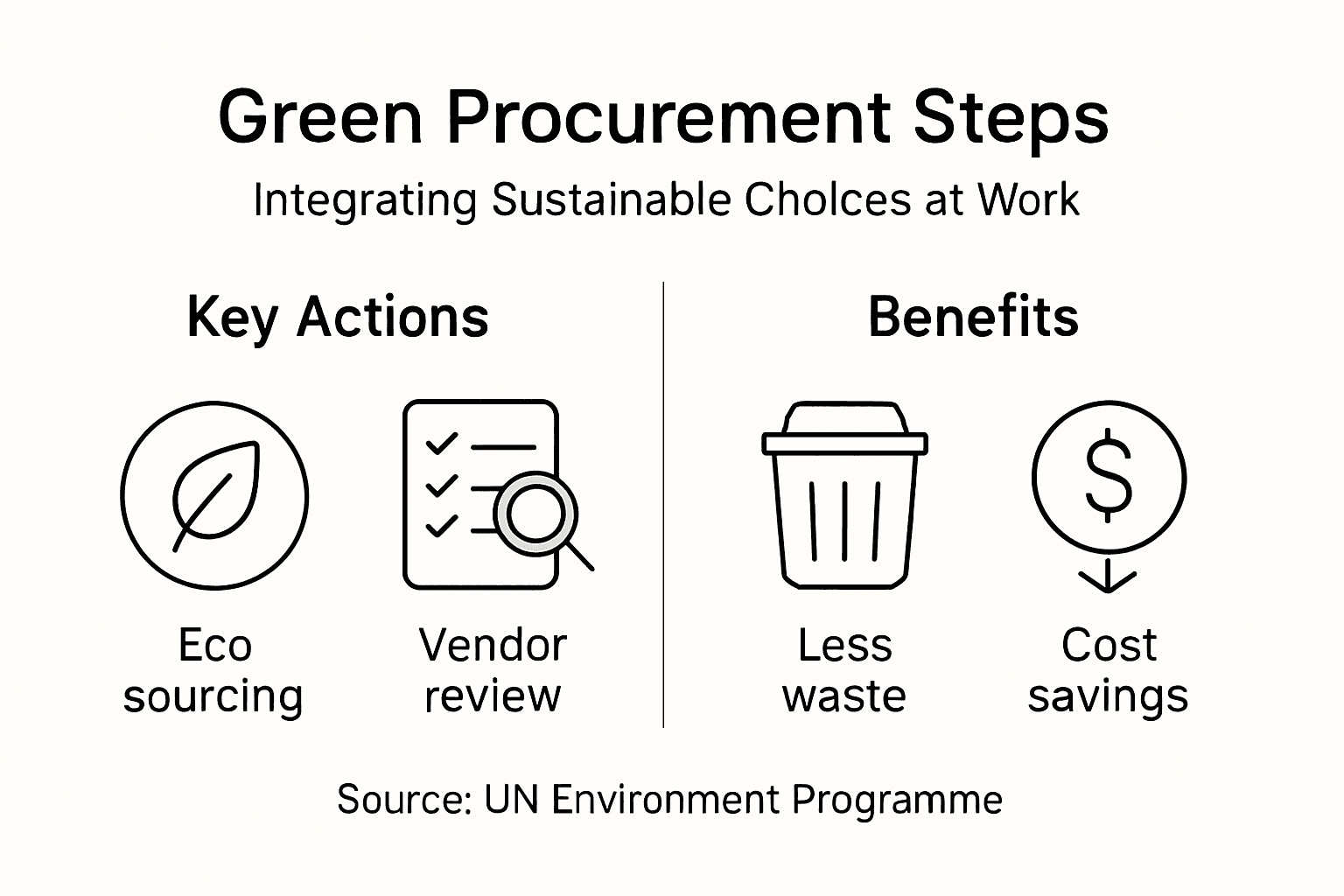
Pro tip: Develop a comprehensive sustainability scorecard to objectively evaluate and compare potential vendors and products based on their environmental performance.
Employee Engagement and Sustainability Culture
Employee engagement represents the cornerstone of successful sustainability initiatives, transforming organizational environmental goals from abstract concepts into tangible, actionable strategies. When employees become active participants in sustainability efforts, companies can create powerful cultural shifts that drive meaningful environmental change.
Employee collaboration frameworks demonstrate how organizational cultures can systematically embed sustainability principles across operational processes. These approaches leverage collective intelligence, encouraging staff to develop innovative solutions that reduce environmental impacts and create shared responsibility.
Key strategies for building a sustainability-focused workplace culture include:
-
Leadership and Communication
- Transparently sharing sustainability goals
- Creating clear environmental performance metrics
- Recognizing and rewarding sustainable behaviors
- Developing sustainability champions within teams
-
Employee Involvement Mechanisms
- Organizing green team initiatives
- Implementing suggestion programs for sustainability ideas
- Conducting regular environmental training
- Creating cross-departmental sustainability committees
-
Motivational Approaches
- Connecting sustainability to personal values
- Offering professional development in green skills
- Providing meaningful impact tracking
- Supporting individual environmental contributions
Green workplace engagement strategies reveal that meaningful participation goes beyond mandatory programs. Successful approaches create emotional connections between employees and sustainability objectives, transforming environmental responsibility from a corporate mandate to a shared organizational mission.
By fostering a culture where sustainability is viewed as a collective journey, businesses can unlock unprecedented levels of innovation, commitment, and environmental stewardship. This approach turns sustainability from a compliance requirement into a dynamic, engaging organizational strategy.
Pro tip: Create a collaborative digital platform where employees can track, share, and celebrate their sustainability contributions in real-time.
Costs, ROI, and Common Pitfalls to Avoid
Sustainability initiatives represent strategic investments that deliver far more than environmental benefits, offering tangible financial returns and competitive advantages for forward-thinking organizations. Understanding the economic landscape of sustainability requires a nuanced approach that balances ecological responsibility with financial pragmatism.
Sustainable business practices generate multiple economic advantages, including direct cost savings, enhanced brand reputation, and new market opportunities. These initiatives transform sustainability from a perceived expense into a strategic financial driver.
Common sustainability investment considerations include:
-
Direct Cost Savings
- Energy efficiency reductions
- Waste management optimization
- Resource consumption minimization
- Reduced operational overhead
-
Indirect Financial Benefits
- Enhanced brand reputation
- Improved customer loyalty
- Attraction of socially conscious talent
- Risk mitigation strategies
-
Potential Investment Pitfalls
- Insufficient long-term planning
- Inadequate performance measurement
- Lack of comprehensive stakeholder engagement
- Disconnected sustainability strategies
Sustainability implementation challenges often emerge from treating environmental initiatives as isolated projects rather than integrated business strategies. Successful approaches require holistic perspectives that align sustainability goals with core organizational objectives and measurable key performance indicators.
Measuring return on investment demands sophisticated approaches that capture both tangible financial metrics and intangible value creation. Organizations must develop robust frameworks that track environmental impact alongside economic performance, ensuring sustainability becomes a genuine strategic priority.
Below is a summary of the financial and organizational impacts associated with sustainability initiatives:
| Financial Benefit | Description | Long-Term Impact | Common Pitfall |
|---|---|---|---|
| Direct Cost Savings | Reduced energy & waste costs | Higher profit margins | Neglecting ongoing monitoring |
| Enhanced Brand Reputation | Positive public perception | Loyal customer base | Underestimating stakeholder needs |
| Market Expansion | Access to new green markets | Business growth | Lack of strategic planning |
| Risk Mitigation | Lower regulatory risks | Sustainable resilience | Treating sustainability as optional |
Pro tip: Develop a comprehensive sustainability scorecard that translates environmental metrics into clear financial and operational value indicators.
Empower Your Eco-Friendly Business Strategy with Sustainable Choices
The article highlights the challenges businesses face in integrating eco-friendly business strategies such as resource conservation, waste reduction, and sustainable supply chain management. Addressing these goals requires practical actions that align with your companys commitment to sustainability and environmental responsibility. One key step is eliminating single-use plastics and reducing waste within your workplace and operational processes.
FLASKE offers personalized stainless steel drink bottles and coffee cups designed to help businesses transform everyday choices into impactful sustainability practices. By switching to durable, reusable bottles, you contribute to waste minimization and a lower carbon footprint while enhancing your brands reputation as a leader in green innovation. Discover how investing in sustainable products complements your green procurement strategies and supports a culture of environmental stewardship.
Elevate your eco-friendly initiatives today by exploring our range of sustainable drinkware that perfectly aligns with your goals. Explore FLASKEs solutions and take the next step toward reducing waste and boosting your organizations environmental impact.
Visit FLASKE now and join the movement toward a greener future.
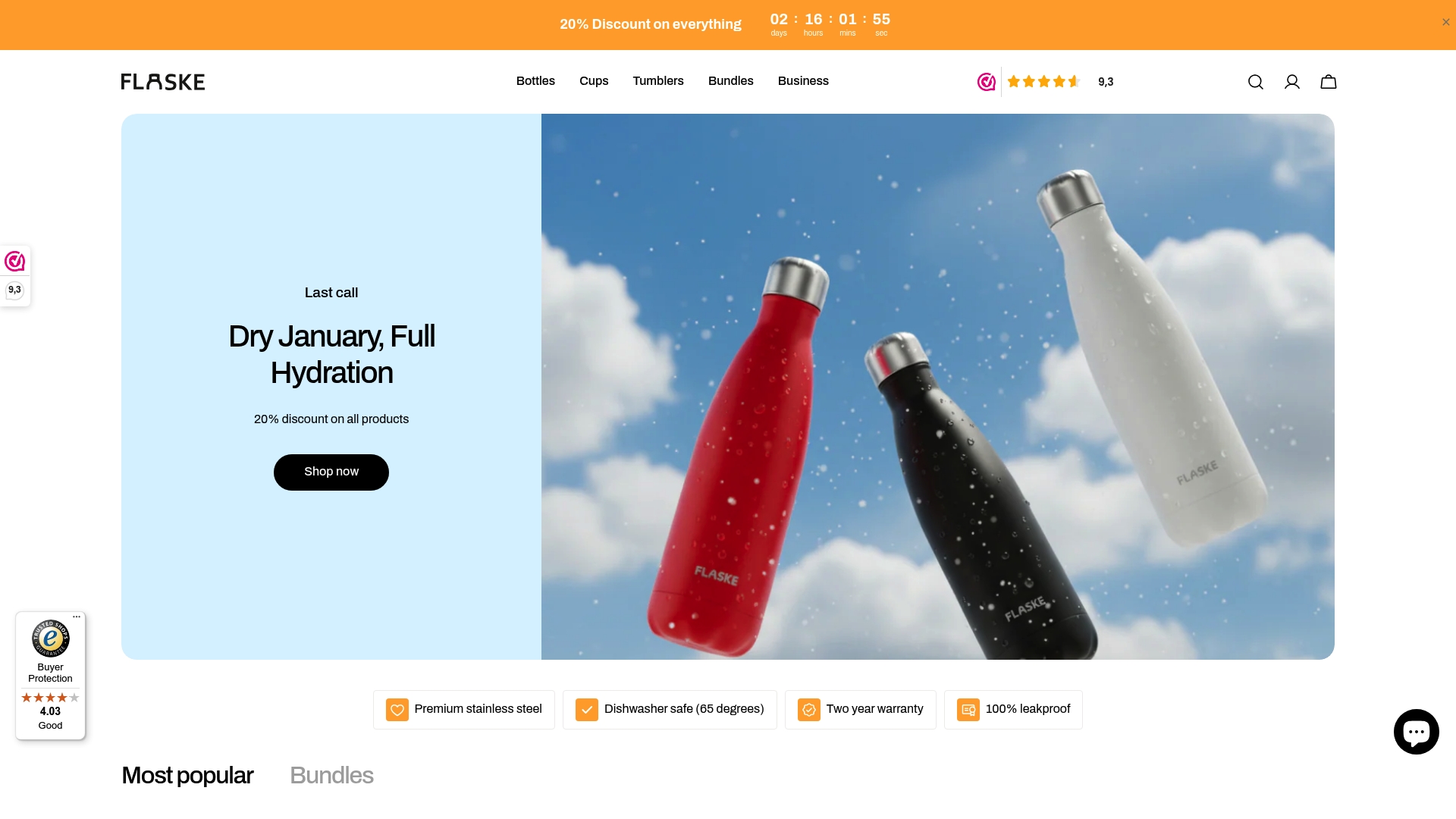
Make sustainability tangible in your business. Choose FLASKE stainless steel bottles that embody innovation, responsibility, and lasting impact.
Frequently Asked Questions
What are eco-friendly business strategies?
Eco-friendly business strategies are systematic approaches organizations use to minimize their environmental impact while maintaining operational efficiency. These strategies integrate sustainable practices across business operations, such as reducing carbon footprints and conserving resources.
How can businesses implement renewable energy solutions?
Businesses can implement renewable energy solutions by integrating renewable energy sources like solar or wind power, investing in energy-efficient technologies, and adopting energy management systems that optimize energy use throughout their operations.
What is the importance of sustainable supply chain management?
Sustainable supply chain management is crucial as it promotes environmentally responsible sourcing, ensures vendor sustainability practices, and reduces the overall carbon footprint of products from production to delivery. This approach not only benefits the environment but can lead to cost savings and brand loyalty.
How can employee engagement enhance sustainability initiatives?
Employee engagement can enhance sustainability initiatives by creating a culture of responsibility and innovation. When employees are actively involved in sustainability efforts, they can contribute ideas, help implement practices, and feel a sense of ownership over the organization’s environmental goals.


