


Choosing materials for eco-friendly corporate branding can be surprisingly complex. The world of stainless steel is filled with diversity and innovation, far beyond the basic assumptions many European sustainability officers share. With over 150 grades and outstanding recyclability, stainless steel offers unmatched performance and environmental benefits for personalized drinkware. This article guides you through stainless steel’s unique advantages, helping you make informed decisions for employee engagement and memorable client gifts.
Table of Contents
- Stainless Steel Defined and Common Misconceptions
- Key Types and Grades of Stainless Steel
- Benefits for Eco-Friendly Corporate Branding
- Durability, Safety, and Health Considerations
- Environmental Impact Versus Plastic and Glass Options
Key Takeaways
| Point | Details |
|---|---|
| Understanding Stainless Steel Complexity | Stainless steel is a diverse family of alloys with over 150 grades, each possessing unique properties for specific applications. |
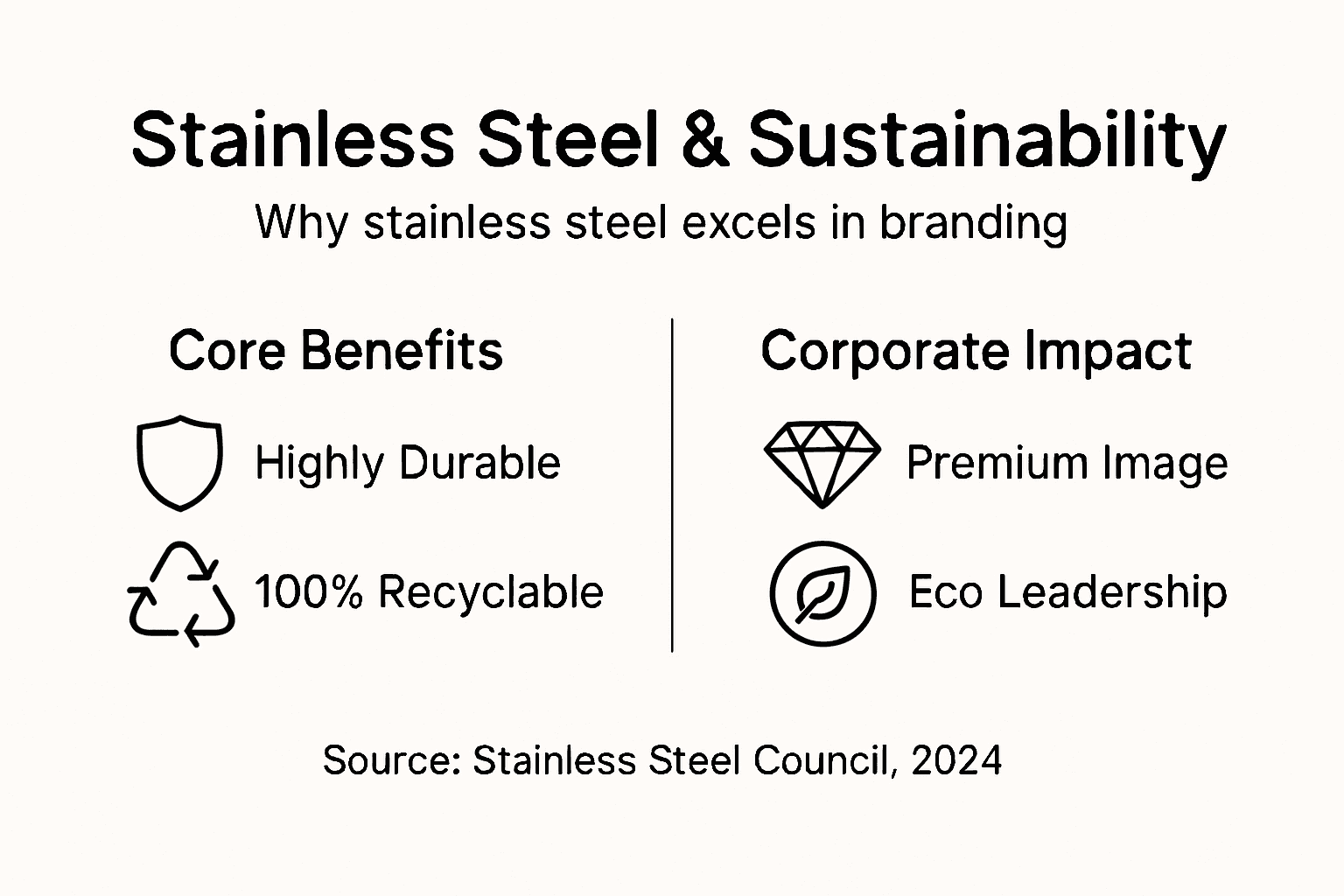
| Sustainability and Recyclability | Stainless steel is over 90% recyclable, offering a circular economy solution that outperforms plastic and glass in sustainability. |
| Material Safety | With exceptional biocompatibility and low toxicity, stainless steel is a safe choice for health-conscious corporate branding. |
| Strategic Material Selection | Choosing the right stainless steel grade can significantly enhance product lifecycle and reduce ecological footprints in corporate initiatives. |
Stainless Steel Defined and Common Misconceptions
Stainless steel is far more complex and versatile than most corporate sustainability professionals realize. While many assume stainless steel is a simple, uniform material, the reality is remarkably nuanced. Common misconceptions about stainless steel composition often overlook its sophisticated metallurgical design.
At its core, stainless steel is an iron-based alloy defined by its unique corrosion-resistant properties. The key differentiator is chromium content - typically a minimum of 10.5% chromium, which creates a protective oxide layer that prevents rust and degradation. Beyond chromium, manufacturers frequently incorporate additional elements like nickel and molybdenum to enhance performance characteristics.
The diversity of stainless steel types is frequently misunderstood. While many corporate buyers believe only two varieties exist (304 and 316), the reality is far more sophisticated:
- Over 150 distinct stainless steel grades are commercially available
- Each grade offers unique mechanical and chemical properties
- Compositions can be tailored for specific industrial, environmental, and sustainability requirements
- Performance varies based on chromium, nickel, molybdenum, and other elemental percentages
Material Classification matters significantly for sustainability strategies. Stainless steel’s composition fundamentally determines its application potential, making comprehensive understanding crucial for corporate decision-makers seeking environmentally responsible solutions.
Pro tip: When selecting stainless steel for corporate branding or sustainability initiatives, always request complete metallurgical specifications to ensure optimal material performance and environmental alignment.
Key Types and Grades of Stainless Steel
Stainless steel is not a monolithic material but a complex family of alloys with remarkable diversity. Stainless steel categories span multiple distinct types that fundamentally differ in composition, performance, and application potential.
The primary stainless steel classifications are defined by their unique metallurgical microstructures. Five primary categories exist, each with specialized characteristics:
-
Austenitic Stainless Steel
- Highest corrosion resistance
- Non-magnetic
- Contains high chromium and nickel
- Most commonly used in food processing and medical equipment
-
Ferritic Stainless Steel
- Magnetic properties
- Lower chromium content
- Moderate corrosion resistance
- Frequently used in automotive and kitchen appliance manufacturing
-
Martensitic Stainless Steel
- Highly heat-treatable
- Magnetic
- High strength and hardness
- Ideal for cutting tools and surgical instruments
-
Duplex Stainless Steel
- Combines austenitic and ferritic properties
- Enhanced strength and corrosion resistance
- Used in chemical processing and marine environments
-
Precipitation Hardening Stainless Steel
- Can be heat-treated for maximum strength
- Excellent for aerospace and high-performance engineering applications
Common stainless steel grades like 304 and 316 represent specific compositions within these broader categories. Each grade offers nuanced performance characteristics that make them suitable for distinct industrial and sustainability applications.
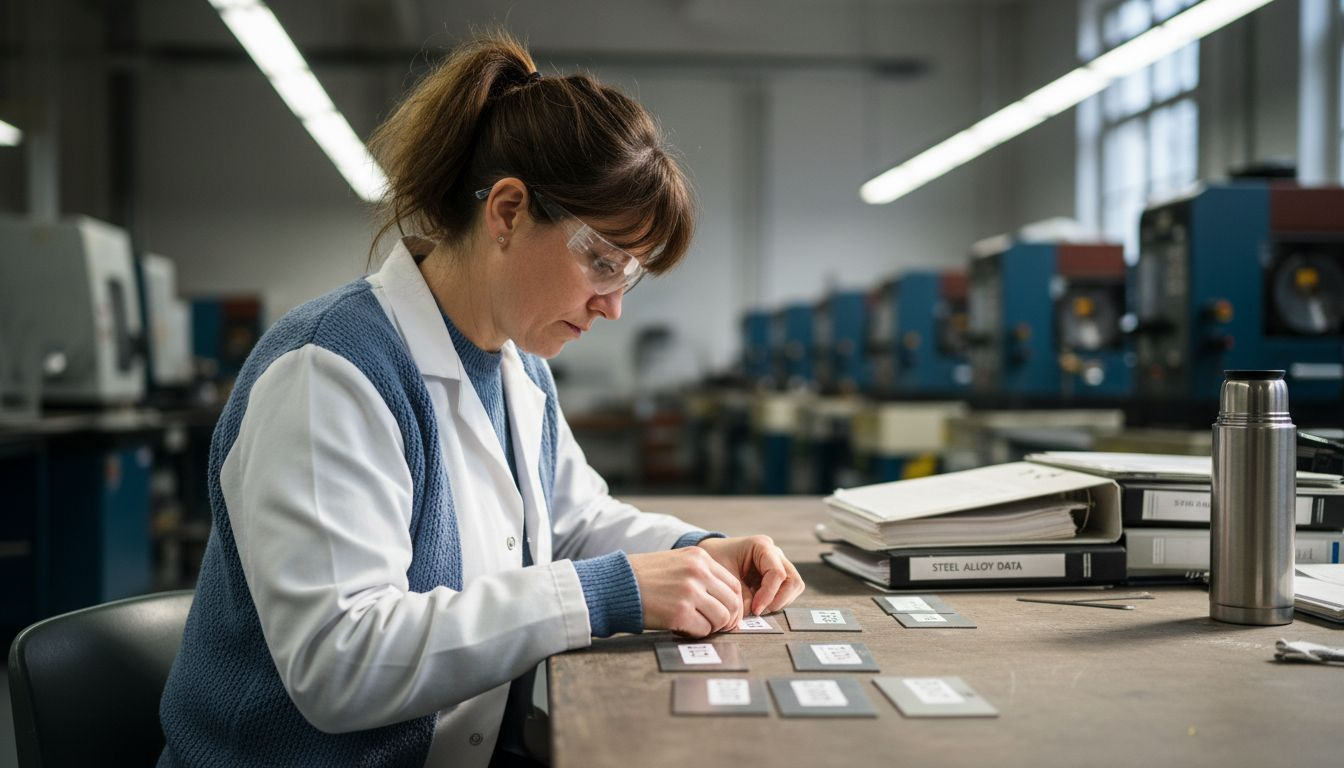
Understanding these metallurgical variations is crucial for corporate sustainability professionals seeking materials with optimal environmental and functional properties. The right stainless steel type can significantly impact product lifecycle, recyclability, and overall ecological footprint.
Here’s an at-a-glance comparison of the five main stainless steel types and their most common corporate use cases:
| Stainless Steel Type | Key Characteristics | Typical Corporate Applications |
|---|---|---|
| Austenitic | Excellent corrosion resistance | Food equipment, branded drinkware |
| Ferritic | Magnetic and cost-effective | Kitchen appliances, eco-friendly signage |
| Martensitic | High strength, heat treatable | Cutting tools, promotional knives |
| Duplex | Enhanced durability, dual phase | Marine giveaways, chemical branding |
| Precipitation Hardening | Superior strength, heat-stable | High-end executive gifts, aerospace sets |
Pro tip: When selecting stainless steel for corporate initiatives, consult metallurgical experts who can match specific grade properties with your sustainability and performance requirements.
Benefits for Eco-Friendly Corporate Branding
Corporate sustainability is no longer a buzzword - it’s a strategic imperative. Stainless steel emerges as a sustainability superstar that offers unprecedented advantages for brands committed to environmental responsibility.
Recyclability stands at the core of stainless steel’s environmental credentials. With an extraordinary recycling rate exceeding 90%, this material represents a circular economy dream. Corporate sustainability officers can leverage stainless steel’s unique properties to demonstrate genuine commitment to ecological principles:
- 100% recyclable without quality degradation
- Minimal waste generation during production
- Exceptional durability reducing replacement frequency
- Low carbon footprint compared to alternative materials
- Supports long-term waste reduction strategies
Sustainable manufacturing principles are fundamentally enhanced by stainless steel’s inherent characteristics. Its corrosion resistance ensures extended product lifecycles, dramatically reducing resource consumption and environmental impact. Brands choosing stainless steel make a tangible statement about their commitment to responsible material selection.
Corporate Branding Advantages extend beyond environmental metrics. Stainless steel communicates sophistication, durability, and forward-thinking design. By integrating this material into corporate gifting, promotional items, or branded merchandise, companies signal their dedication to quality and sustainability simultaneously.
Pro tip: When selecting stainless steel for corporate branding, prioritize products that showcase both environmental performance and aesthetic appeal to maximize brand perception and sustainability credentials.
Durability, Safety, and Health Considerations
Stainless steel represents a pinnacle of material safety and performance, far surpassing conventional alternatives. Comprehensive toxicity assessments reveal its exceptional biocompatibility and low health risks, making it an ideal choice for corporate branding with health-conscious implications.
The material’s remarkable safety profile stems from its unique molecular structure. A protective chromium oxide surface creates a natural barrier that minimizes metal ion release, ensuring minimal health hazards across diverse applications:
- Extremely low toxicity ratings
- Non-reactive surface preventing contamination
- Resistance to bacterial growth
- Safe for prolonged skin contact
- Hygienic properties ideal for food and medical environments
Safety considerations in industrial applications demonstrate stainless steel’s extraordinary durability. Its mechanical strength and corrosion resistance make it suitable for challenging environments, from coastal regions to high-moisture industrial settings. Corporate sustainability officers can confidently select stainless steel knowing it maintains structural integrity and safety standards over extended periods.
Beyond physical performance, stainless steel communicates a profound commitment to employee and user well-being. Its non-reactive, hygienic properties transcend mere material selection - they represent a tangible investment in health and safety across corporate branding initiatives.
Pro tip: Conduct comprehensive material testing to verify specific stainless steel grades’ compatibility with your intended corporate branding application and environmental conditions.
Environmental Impact Versus Plastic and Glass Options
Navigating the complex landscape of sustainable materials requires a critical examination of environmental trade-offs. Life cycle assessments reveal crucial differences between stainless steel and conventional packaging materials, highlighting stainless steel’s superior long-term sustainability profile.
Environmental Comparison Metrics demonstrate stainless steel’s remarkable advantages over plastic and glass alternatives:
-
Plastic Limitations
- High marine pollution potential
- Single-use design
- Degrades in quality after recycling
- Significant carbon footprint
-
Glass Drawbacks
- Extremely heavy transportation costs
- Energy-intensive production
- Fragile and prone to breakage
- Limited recycling efficiency
-
Stainless Steel Benefits
- 100% recyclable
- Minimal degradation over multiple use cycles
- Low carbon footprint after initial production
- Exceptional durability and longevity
Comparative environmental studies consistently underscore stainless steel’s potential to dramatically reduce long-term environmental impact. While initial production costs might be higher, the material’s extraordinary lifecycle makes it a substantially more sustainable choice for corporate branding and environmental responsibility.
Stainless steel transcends traditional material constraints by offering a scientifically validated, environmentally conscious alternative that aligns with progressive corporate sustainability strategies. Its performance metrics demonstrate a genuine commitment to reducing ecological footprints.
This table summarizes the environmental impact of stainless steel compared to plastic and glass in key corporate sustainability criteria:
| Attribute | Stainless Steel | Plastic | Glass |
|---|---|---|---|
| Recyclability Rate | Above 90%, retains quality | Low, degrades with recycling | Moderate, sometimes downcycled |
| Lifecycle Durability | Lasts decades, minimal wear | Single-use or limited lifespan | Brittle, risk of breakage |
| Transportation Impact | Moderate weight, compact | Lightweight, bulky packaging | Heavy, expensive to transport |
| Eco Brand Perception | Premium, responsible image | Often negative, waste concern | Neutral, but fragile image |
Pro tip: Conduct a comprehensive lifecycle analysis specific to your corporate context to quantify the precise environmental benefits of transitioning to stainless steel.
Elevate Your Brand with Sustainable Stainless Steel Solutions
Choosing stainless steel is a powerful step toward solving the challenges of creating eco-friendly corporate branding that truly reflects your commitment to sustainability. The article highlights the importance of understanding stainless steel’s diverse grades and unmatched recyclability. Your goal is to showcase your brand’s premium quality while supporting a circular economy and reducing environmental impact. At FLASKE, we specialize in durable, personalized stainless steel drinkware designed to meet these exact needs.
Experience how our range of customizable stainless steel bottles and coffee cups align perfectly with the principles of sustainable manufacturing and health safety discussed in the article. Show your stakeholders and customers that your brand stands for durability, recyclability, and responsible material choice.
Ready to make a meaningful impact with branded drinkware that embodies stainless steel’s benefits for sustainability? Visit FLASKE’s official site to explore eco-friendly options tailored to your corporate goals. Discover how personalized stainless steel products from FLASKE can help your brand lead in sustainable innovation today. Start your journey toward greener branding now and connect with stainless steel solutions that last.
Frequently Asked Questions
What are the primary benefits of using stainless steel for sustainable branding?
Stainless steel offers numerous benefits for sustainable branding, including its high recyclability rate (over 90%), durability, minimal environmental impact over its lifecycle, and ability to reduce waste. It signifies a commitment to quality and ecological responsibility.
How does stainless steel compare to plastic and glass in terms of environmental impact?
Stainless steel has a significantly lower environmental impact than plastic and glass. It is 100% recyclable without degrading quality, lasts for decades, and has a low carbon footprint after initial production. In contrast, plastic contributes to marine pollution, and glass is heavy and fragile.
What are the different types of stainless steel, and how do they affect sustainability?
Stainless steel is categorized into five main types—Austenitic, Ferritic, Martensitic, Duplex, and Precipitation Hardening—each with unique characteristics. The right choice can enhance product longevity, reduce resource consumption, and align with specific sustainability goals.
Why is the composition of stainless steel important for sustainability initiatives?
The composition of stainless steel, including its chromium, nickel, and molybdenum content, determines its corrosion resistance, strength, and environmental impact. Understanding these factors helps corporate decision-makers select the optimal grade for sustainability and performance needs.


