


Every multinational office faces the challenge of cutting waste while keeping employees energized. Busy break rooms filled with single-use coffee cups create mounting disposal issues and conflicting views about what truly counts as sustainable. By embracing reusable coffee cups as a core sustainability strategy, office managers can move beyond surface-level solutions and drive real environmental impact. This guide breaks down the core principles, addresses persistent myths, and highlights straightforward steps for building a system that is both practical and inspiring in any corporate workspace.
Table of Contents
- Reusable Coffee Cups: Core Principles And Myths
- Material Choices And Key Performance Factors
- Office Implementation Models And Success Stories
- Corporate Sustainability, Brand Image, And Csr
- Financial Impact And Common Transition Challenges
Key Takeaways
| Point | Details |
|---|---|
| Reusable Coffee Cups Drive Sustainability | Implementing reusable coffee cups fosters systemic change in beverage consumption and reduces organizational waste. |
| Material Selection is Crucial | Selecting durable materials like stainless steel can enhance performance and sustainability, minimizing health risks. |
| Overcome Myths for Adoption | Address common myths about hygiene and complexity to promote widespread acceptance among employees. |
| Strategic Implementation is Key | A comprehensive approach involving community engagement and infrastructure investment ensures successful adoption of reusable cup programs. |
Reusable Coffee Cups: Core Principles and Myths
Reusable coffee cups represent more than a trendy environmental statement - they are a strategic solution for modern offices seeking sustainable practices. The fundamental principle behind these cups transcends mere waste reduction, focusing on creating systemic change in how organizations consume beverages.
The core principles of reusable coffee cups revolve around several critical factors:
- Repeated Use: Maximum environmental benefit occurs through consistent, long-term usage
- Material Selection: Choosing durable, sustainable materials like stainless steel or high-grade recyclable plastics
- Hygiene Management: Implementing proper cleaning and maintenance protocols
- Cost Efficiency: Reducing long-term expenses associated with disposable cup purchases
Many myths surround reusable coffee cups, often preventing widespread adoption. lifecycle assessment research debunks several common misconceptions about their environmental impact. Contrary to popular belief, not all compostable or recyclable cups are automatically sustainable.
The true environmental benefit of a reusable cup emerges after multiple uses, challenging the assumption that single-use alternatives are more convenient.
Office managers frequently encounter resistance based on several persistent myths:
- Myth: Reusable cups are less hygienic than disposables
- Myth: The environmental savings are minimal
- Myth: Implementing reusable systems is too complex
- Myth: Employee adoption will be low
In reality, community-driven reusable strategies demonstrate significant potential for successful implementation. By addressing concerns proactively and creating supportive infrastructure, offices can transform cup usage from a wasteful habit to a sustainable practice.
Pro tip: Start your reusable cup program with a voluntary pilot program, providing employees with branded cups and tracking both environmental and cost savings to build organizational momentum.
Material Choices and Key Performance Factors
Selecting the right materials for reusable coffee cups is a critical decision that impacts environmental sustainability, performance, and long-term cost-effectiveness for office environments. Life-cycle assessment research reveals that material choice dramatically influences a cup’s overall ecological footprint.
The primary materials used in reusable office coffee cups include:
- Stainless Steel: Extremely durable, long-lasting, and 100% recyclable
- High-Grade Plastics: Lightweight and cost-effective, but with potential health concerns
- Ceramic: Natural material with excellent heat retention, but more fragile
- Glass: Recyclable and non-reactive, but heavier and more breakable
Key performance factors that differentiate these materials extend beyond simple durability. Microscopic plastic particle research highlights critical health considerations that go far beyond traditional environmental assessments.
Not all reusable materials are created equal - the right choice depends on comprehensive performance metrics, not just initial sustainability claims.
Critical evaluation criteria for selecting office coffee cup materials include:
- Durability and expected usage lifecycle
- Potential chemical leaching risks
- Energy required for production
- Recyclability and end-of-life environmental impact
- Total cost of ownership
Stainless steel emerges as a superior choice for most office environments, offering an optimal balance between performance, sustainability, and long-term value. Its resistance to chemical leaching, exceptional durability, and complete recyclability make it the most responsible material selection for organizations committed to meaningful environmental stewardship.
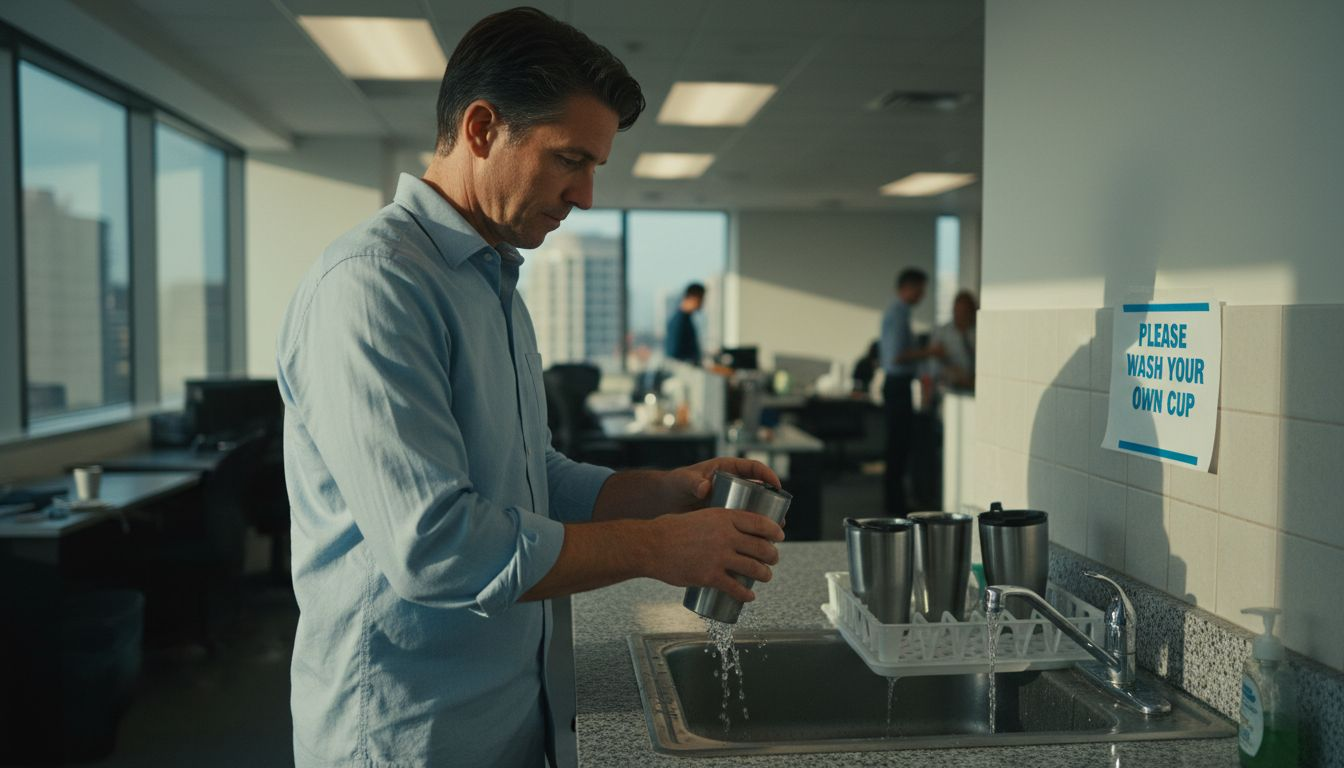
Here’s a comparison of common reusable coffee cup materials used in offices and how they perform:
| Material Type | Durability & Lifespan | Health & Safety Concerns | Maintenance Complexity |
|---|---|---|---|
| Stainless Steel | Very high, 5+ years | No chemical leaching | Easy to clean |
| High-Grade Plastic | Moderate, 1-3 years | Possible microplastics risk | Requires careful washing |
| Ceramic | Fragile, 1-2 years | Chemically inert | Prone to chipping |
| Glass | Breakable, 1-2 years | No chemical leaching | Needs gentle handling |
Pro tip: Conduct a comprehensive material assessment that considers not just upfront costs, but total lifecycle environmental and financial implications before selecting reusable coffee cup materials.
Office Implementation Models and Success Stories
Successful reusable coffee cup implementation requires more than simply replacing disposable containers. Reusable packaging strategies demonstrate that comprehensive approaches involving multiple stakeholders can transform office beverage consumption practices.
Effective implementation models typically incorporate several key elements:
- Community Engagement: Creating buy-in through transparent communication
- Infrastructure Investment: Establishing washing and collection systems
- Incentive Structures: Developing rewards for sustainable practices
- Clear Guidelines: Defining usage protocols and expectations
Standardized Implementation Approaches have emerged as critical for successful adoption. Scaling challenges research highlights the importance of creating systematic, repeatable processes that can be easily integrated into existing office environments.
Successful reusable cup programs are not about replacing containers, but about redesigning organizational beverage consumption culture.
Key steps for successful office implementation include:
- Conduct a preliminary sustainability assessment
- Select appropriate reusable cup materials
- Design a comprehensive return and cleaning infrastructure
- Create employee education and engagement programs
- Implement tracking and measurement systems
Companies like Patagonia and Google have demonstrated that comprehensive reusable cup programs can significantly reduce waste while creating a culture of environmental responsibility. Their models typically involve providing branded reusable cups, creating convenient return stations, and integrating sustainability metrics into broader corporate environmental goals.
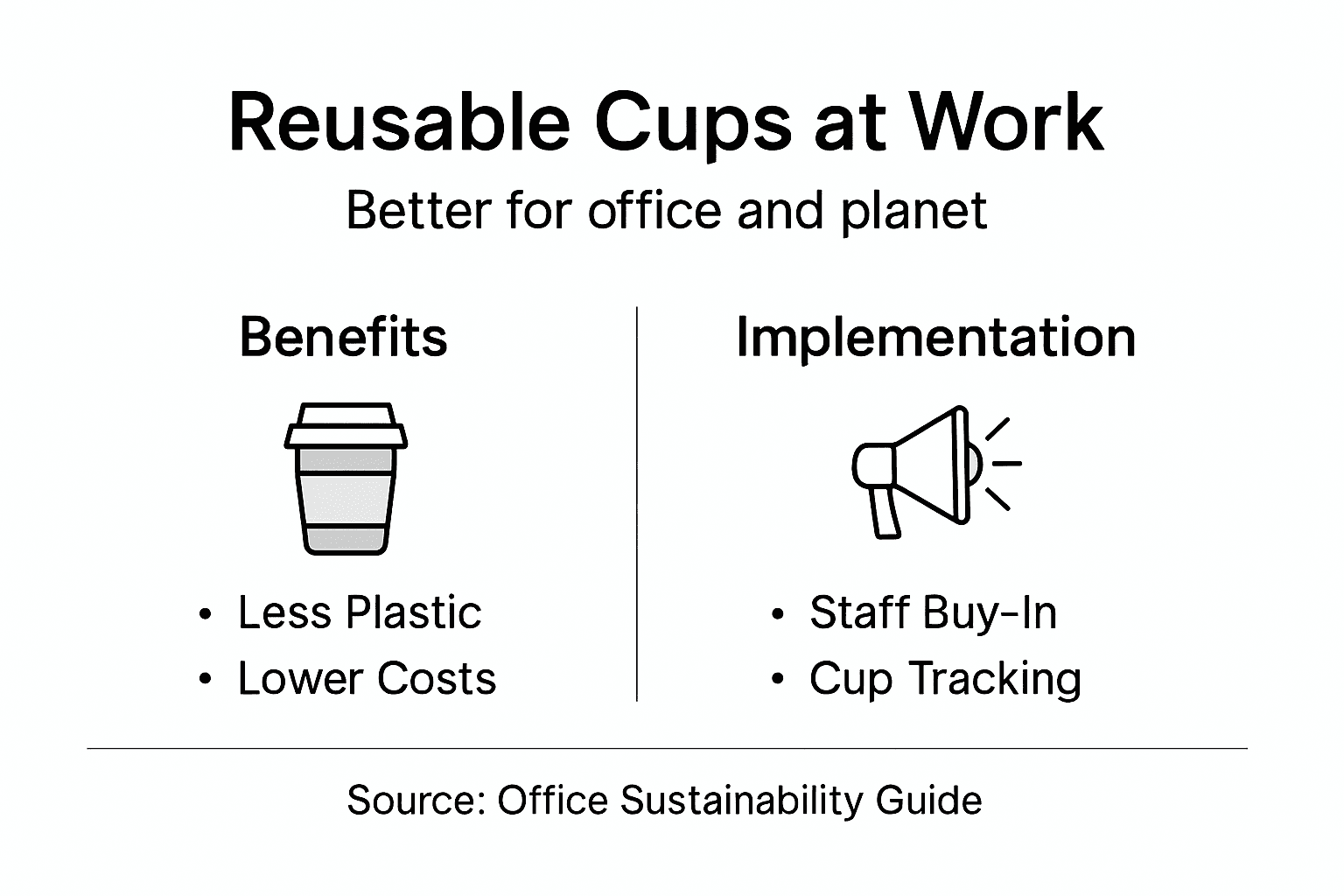
Pro tip: Design your reusable cup program as a holistic system, not just a product replacement, by involving employees in the design and implementation process.
Corporate Sustainability, Brand Image, and CSR
Reusable coffee cups have emerged as a powerful tool for corporations to demonstrate genuine commitment to environmental sustainability and corporate social responsibility. Reusable packaging benefits extend far beyond waste reduction, positioning them as strategic assets for brand differentiation and stakeholder engagement.
Key sustainability impacts of corporate reusable cup programs include:
- Waste Reduction: Dramatically decreasing single-use plastic consumption
- Carbon Footprint: Lowering overall organizational environmental impact
- Employee Engagement: Creating visible sustainability initiatives
- Brand Perception: Signaling corporate environmental leadership
Corporate Social Responsibility (CSR) has evolved from a peripheral marketing strategy to a core business imperative. Reusable consumption models demonstrate how organizations can transform sustainability from a theoretical concept into tangible, measurable action.
Authentic sustainability isn’t about perfect solutions, but about consistent, meaningful progress toward reducing environmental impact.
Strategic considerations for implementing reusable cup programs that enhance brand image:
- Develop transparent reporting mechanisms
- Create measurable sustainability goals
- Integrate employee feedback loops
- Communicate progress consistently
- Link initiatives to broader environmental commitments
Leading corporations like Unilever, Patagonia, and Microsoft have successfully transformed reusable cup initiatives from simple waste reduction strategies into powerful narratives of environmental stewardship. These programs not only reduce ecological footprints but also create compelling stories of corporate responsibility that resonate with employees, consumers, and investors.
Pro tip: Frame your reusable cup program as a comprehensive sustainability strategy, not just an isolated initiative, by connecting it to your organization’s broader environmental goals.
Financial Impact and Common Transition Challenges
Transitioning to reusable coffee cups involves navigating complex financial considerations and organizational challenges that extend far beyond simple product replacement. Café implementation experiences reveal nuanced financial dynamics that require strategic planning and comprehensive approach.
Key financial considerations for reusable coffee cup programs include:
- Initial Investment: Upfront costs for purchasing reusable cups
- Long-Term Savings: Reduced disposable cup expenses
- Infrastructure Costs: Washing stations and collection systems
- Maintenance Expenses: Cup replacement and cleaning protocols
Transition Challenges represent significant barriers that organizations must systematically address. Reusable packaging scaling research highlights the complexity of implementing sustainable consumption models in professional environments.
Financial success requires viewing reusable cup programs as strategic investments, not just operational expenses.
Critical challenges organizations typically encounter include:
- Managing initial capital expenditure
- Developing robust cleaning infrastructures
- Training employees on new systems
- Tracking and measuring program effectiveness
- Overcoming cultural resistance to change
Financial analysis demonstrates that most organizations recoup initial investments within 12-18 months through reduced disposable cup purchases, waste management costs, and enhanced brand reputation. Successful implementations prioritize comprehensive change management, employee engagement, and clear communication of both environmental and economic benefits.
Below is a summary of recurring financial impacts when implementing reusable coffee cups in a corporate setting:
| Financial Factor | Typical Office Impact | Additional Benefits |
|---|---|---|
| Initial Purchase Cost | High upfront investment | Branded items boost image |
| Maintenance/Replacement | Ongoing minor costs | Improved hygiene reputation |
| Disposable Cup Savings | Significant long-term savings | Reduced waste management fees |
| Infrastructure Investment | Moderate setup expense | Supports broader green goals |
Pro tip: Conduct a detailed financial modeling exercise that calculates total cost of ownership, including both direct expenses and indirect benefits like brand perception and employee satisfaction.
Elevate Your Office Sustainability with Reusable Coffee Cups
The challenge of implementing reusable coffee cups in offices goes beyond just swapping disposables. It demands durable, safe, and cost-effective solutions that align with your company’s sustainability goals. Key pain points such as hygiene management, material selection, and employee adoption can be addressed effectively with the right choices. Choosing high-quality stainless steel cups minimizes chemical leaching risks and ensures longevity, supporting long-term waste reduction and financial savings highlighted in the article.
Explore our premium collection of reusable coffee cups designed specifically for office environments at Cups – Flaske. These cups combine sustainable materials with customizable branding options to boost employee engagement and reinforce your corporate social responsibility efforts.
Ready to redefine your office beverage culture and create a lasting environmental impact? Visit Flaske today to discover how our durable, personalized stainless steel coffee cups can help your organization overcome transition challenges while enhancing brand image. Take the first step now by exploring our Cups – Flaske selection and join the movement towards a greener workplace.
Frequently Asked Questions
What are the core principles behind using reusable coffee cups in offices?
The core principles include repeated use for maximum environmental benefit, choosing durable and sustainable materials, implementing proper hygiene management, and achieving cost efficiency by reducing long-term expenses related to disposable cups.
Are reusable coffee cups hygienic to use compared to disposable cups?
Yes, reusable coffee cups can be more hygienic if properly cleaned and maintained. Concerns about hygiene often stem from misconceptions, as they can be effectively washed to meet health standards.
How do reusable coffee cups contribute to sustainability in the workplace?
Reusable coffee cups help reduce single-use plastic waste, lower the carbon footprint of operations, and create a culture of environmental responsibility among employees, thereby aligning corporate practices with sustainability goals.
What should organizations consider when selecting materials for reusable coffee cups?
Organizations should evaluate durability, potential chemical leaching risks, energy required for production, recyclability, and the total cost of ownership. Stainless steel is often a preferred material due to its durability, safety, and long-lasting benefits.


