


Every multinational workforce faces the challenge of keeping employees hydrated across varied climates and cultures. Hydration directly influences metabolism, immunity, and cognitive function, making it a crucial element of workplace wellness worldwide. By developing strategies built around global hydration needs, HR and office managers can support both the health and productivity of diverse teams. This guide outlines practical steps for assessing, customizing, and sustaining effective hydration in international office environments.
Table of Contents
- Step 1: Assess Employee Hydration Needs Globally
- Step 2: Design Customized Hydration Solutions For Each Office
- Step 3: Implement Hydration Stations And Sustainable Drinkware
- Step 4: Promote Hydration Awareness And Engagement
- Step 5: Monitor Hydration Usage And Optimize Workplace Strategy
Quick Summary
| Key Insight | Explanation |
|---|---|
| 1. Assess Global Hydration Needs | Use culturally sensitive surveys and data methods to understand employee hydration habits across locations. |
| 2. Customize Office Hydration Solutions | Tailor hydration strategies based on unique workplace environments and employee preferences for effective hydration. |
| 3. Implement Effective Hydration Stations | Create accessible water stations with quality filters and reusable drinkware to promote regular water intake. |
| 4. Foster Hydration Awareness | Engage employees through educational campaigns and interactive challenges to prioritize hydration in their daily routines. |
| 5. Monitor and Optimize Hydration Strategies | Leverage technology to track hydration patterns and refine strategies based on data-driven insights for improved workplace wellness. |
Step 1: Assess Employee Hydration Needs Globally
Understanding your organization’s hydration landscape requires a strategic, multicultural approach to tracking employee water consumption patterns and wellness needs. By implementing a comprehensive assessment framework, you can develop targeted hydration strategies that support workforce health across diverse international contexts.
To effectively assess global hydration needs, organizations should leverage multiple data collection methods:
- Employee Health Surveys: Design culturally sensitive questionnaires that explore water intake habits, preferences, and potential barriers
- Biometric Screenings: Conduct voluntary health assessments measuring hydration indicators like urine color and electrolyte balance
- Regional Variability Analysis: Consider geographic and climate differences that impact individual water requirements
- Workplace Environment Evaluation: Assess current water access points, beverage options, and hydration infrastructure
The goal is creating a nuanced understanding of how different populations within your organization consume water. Research from Harvard’s School of Public Health suggests global hydration recommendations vary, with general guidelines of approximately 11 cups for women and 16 cups for men daily. However, these numbers fluctuate based on individual factors like climate, physical activity, and metabolic differences.
Effective global hydration strategies recognize that water consumption is not one-size-fits-all but requires a personalized, culturally informed approach.
Pro tip: Develop anonymous tracking mechanisms that respect employee privacy while gathering meaningful hydration insights across international teams.
Step 2: Design Customized Hydration Solutions for Each Office
Creating effective hydration strategies requires a nuanced approach that recognizes the unique characteristics of each workplace environment. Your goal is to develop targeted solutions that address the specific wellness needs and cultural contexts of different office settings across your organization.
To design customized hydration solutions, focus on these key strategies:
- Infrastructure Assessment: Evaluate existing water access points, kitchen facilities, and workplace layout
- Employee Preference Mapping: Conduct surveys to understand beverage preferences and hydration habits
- Climate and Location Considerations: Adapt hydration strategies based on regional temperature and workplace conditions
- Technology Integration: Implement wearable hydration monitoring technologies to track individual fluid intake
Successful customization involves understanding that hydration needs vary dramatically across different work environments. Workplace wellness research emphasizes the importance of tailoring hydration solutions to specific employee behaviors and organizational cultures. This might mean providing different water stations in manufacturing facilities compared to corporate office settings, or designing unique hydration programs for outdoor workers versus sedentary professionals.
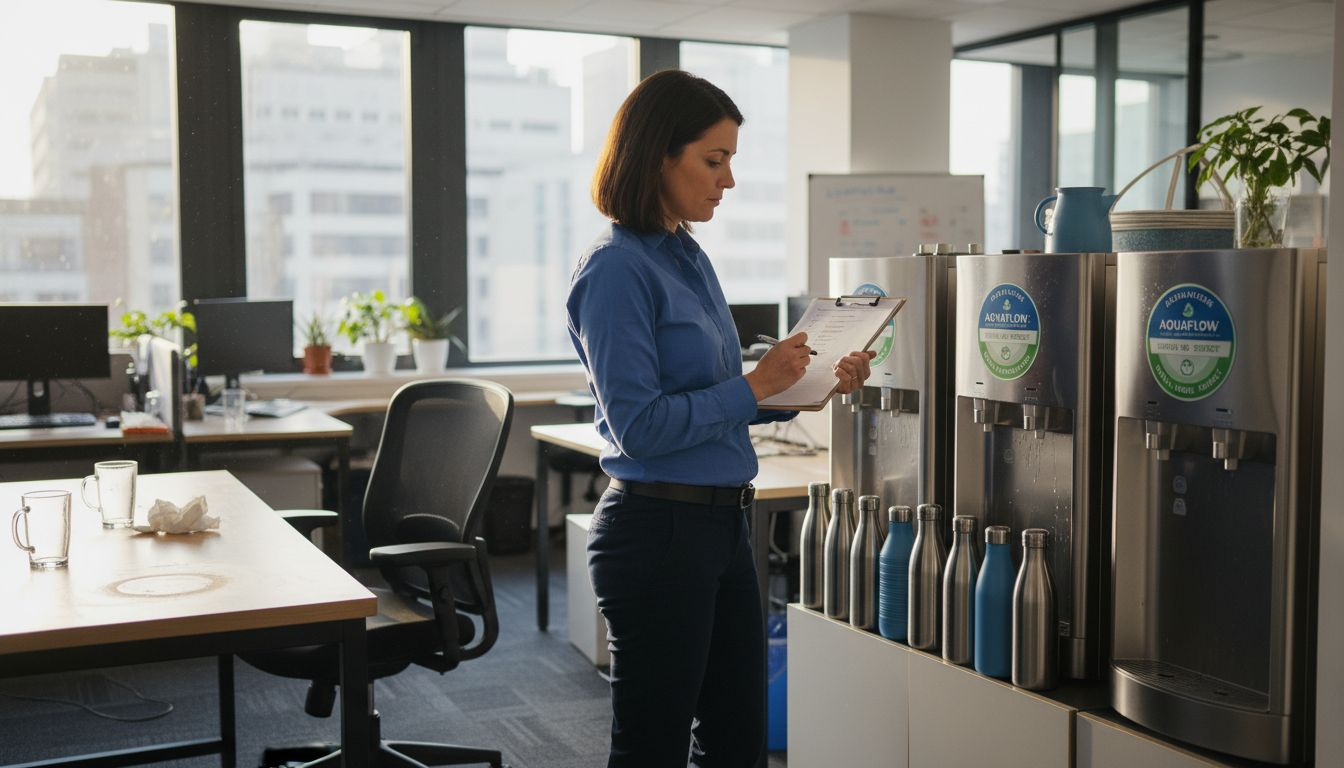
Here is a comparison of office hydration solution types and their unique advantages:
| Solution Type | Strengths | Best For |
|---|---|---|
| Central Water Stations | High capacity, cost-effective | Large corporate offices |
| Individual Water Bottles | Personalization, easy to track | Flexible or remote teams |
| Water Delivery Services | Reliable supply, minimal setup | Sites with limited plumbing |
| Hydration Monitoring Devices | Data-driven insights, customization | Wellness-focused organizations |
Effective hydration solutions are not one-size-fits-all but require a personalized approach that considers workplace diversity and individual needs.
Pro tip: Create flexible hydration programs that can be easily modified to suit different office environments and employee preferences.
Step 3: Implement Hydration Stations and Sustainable Drinkware
Designing an effective workplace hydration strategy requires thoughtful implementation of infrastructure that supports employee wellness and environmental sustainability. Your goal is to create accessible, convenient hydration solutions that encourage regular water intake while minimizing plastic waste.
Key elements for implementing hydration stations include:
- Location Strategy: Position water refill stations near high-traffic areas like break rooms, conference spaces, and workstations
- Filtration Quality: Install high-grade water filtration systems with clear maintenance protocols
- Drinkware Options: Provide reusable bottles and cups that align with your organization’s sustainability goals
- Tracking Mechanisms: Use usage counters to monitor hydration station effectiveness
Successful implementation draws inspiration from healthcare models like the NHS, which strategically placed hydration stations to support staff well-being. This approach involves more than just installing water points. It requires creating a culture that prioritizes hydration as a critical component of workplace wellness.
Effective hydration stations are not just about water access. They represent an organizational commitment to employee health and environmental responsibility.
Pro tip: Design hydration stations with multiple dispensing options to accommodate different employee preferences and bottle sizes.
Step 4: Promote Hydration Awareness and Engagement
Engaging employees in a comprehensive hydration strategy requires more than just infrastructure. Your goal is to create a culture of wellness that actively motivates and educates staff about the critical role of proper fluid intake in maintaining health and productivity.
Effective hydration awareness strategies include:
- Educational Campaigns: Share research-backed hydration insights about health benefits
- Interactive Challenges: Design workplace hydration competitions that track water consumption
- Myth-Busting Sessions: Address common misconceptions about caffeine and hydration
- Peer Support Networks: Encourage team-based hydration accountability groups
Workplace hydration challenges provide an innovative approach to increasing engagement. Employee wellness programs demonstrate that structured tracking and goal-setting can significantly improve daily water consumption. These initiatives transform hydration from a personal habit into a collaborative wellness journey, making health improvements more enjoyable and sustainable.
Hydration awareness is not about lecturing employees, but inspiring them to make healthier choices through supportive, engaging strategies.
Pro tip: Use gamification techniques and digital tracking tools to make hydration monitoring fun and interactive for employees.
Step 5: Monitor Hydration Usage and Optimize Workplace Strategy
Tracking and analyzing hydration patterns transforms workplace wellness from a static program into a dynamic, responsive system. Your objective is to leverage data-driven insights that continuously improve hydration infrastructure and employee engagement across different workplace environments.
Key monitoring strategies include:
- Technology Integration: Implement wearable hydration monitoring devices for real-time fluid intake tracking
- Data Collection Methods: Use sensor-based systems to gather comprehensive hydration metrics
- Performance Analysis: Compare hydration levels against productivity and wellness indicators
- Continuous Improvement: Develop adaptive strategies based on collected data insights
IoT-based hydration monitoring systems enable precise tracking of individual and collective hydration status, providing actionable intelligence for wellness program refinement. These technologies go beyond simple measurement, offering nuanced insights into how hydration impacts employee performance, health, and organizational productivity.
The following table summarizes the impact of modern hydration monitoring technologies in the workplace:
| Technology | Key Benefit | Example Application |
|---|---|---|
| Wearable Devices | Real-time intake tracking | Employee health optimization |
| IoT Water Stations | Usage analytics | Infrastructure investment planning |
| App-based Trackers | Goal setting and reminders | Engagement in wellness challenges |
Effective hydration monitoring is not about surveillance, but about empowering employees with personalized health insights.
Pro tip: Implement anonymized data reporting to maintain employee privacy while gathering meaningful hydration trend information.
Elevate Your Workplace Hydration Strategy with Sustainable Solutions
The “Workplace Hydration Strategy Guide for Employee Wellness” highlights key challenges like creating personalized hydration programs that respect cultural diversity and fostering employee engagement while maintaining sustainability. Employees need reliable access to water and reusable drinkware that supports consistent hydration without contributing to environmental waste. This guide emphasizes hydration stations, sustainable drinkware, and technology-driven monitoring to boost wellness and productivity.
At FLASKE, we understand these pain points and offer durable, personalized stainless steel bottles and coffee cups designed specifically for companies committed to employee health and sustainability. Our products align perfectly with hydration strategies that encourage regular water intake while minimizing plastic waste. Discover how our solutions can transform your hydration infrastructure and wellness culture starting today.
Ready to build a hydration program your employees will appreciate and your planet will thank you for? Explore our collection of sustainable drinkware crafted for workplace wellness. Join organizations worldwide choosing FLASKE for personalized, eco-friendly hydration. Visit FLASKE now to start your wellness journey. Learn more about improving hydration culture and sustainability at https://flaske.com.
Frequently Asked Questions
How can I assess my workplace’s hydration needs effectively?
To assess your workplace’s hydration needs, conduct employee health surveys and evaluate existing water access points. Gather data on water consumption patterns and preferences to develop targeted solutions suited to your workforce.
What are some customized hydration solutions for different office settings?
Customized hydration solutions may include installing central water stations in large offices and providing individual water bottles for remote teams. Evaluate the specific needs of each office environment to design the most effective hydration strategy.
How can I implement hydration stations in the workplace?
To implement hydration stations, choose high-traffic locations for water dispensers, ensure quality filtration systems, and provide reusable drinkware. Create a plan to set up these stations within the next 30 days to enhance hydration access for employees.
What strategies can promote employee engagement in hydration awareness?
Promote hydration awareness through educational campaigns, interactive challenges, and peer support networks. Establish fun initiatives like hydration competitions to motivate employees to track their water intake and stay hydrated together.
How can I monitor hydration usage effectively in the workplace?
Effectively monitor hydration usage by implementing technology such as tracking apps or sensor-based systems to gather hydration data. Regularly analyze this information to identify trends and areas for improvement in your hydration strategy.
What adjustments should I make based on hydration data collected?
Based on hydration data, adjust your hydration infrastructure and employee engagement programs to meet identified needs. Consider making changes such as enhancing water access or launching new educational initiatives within two months.


