

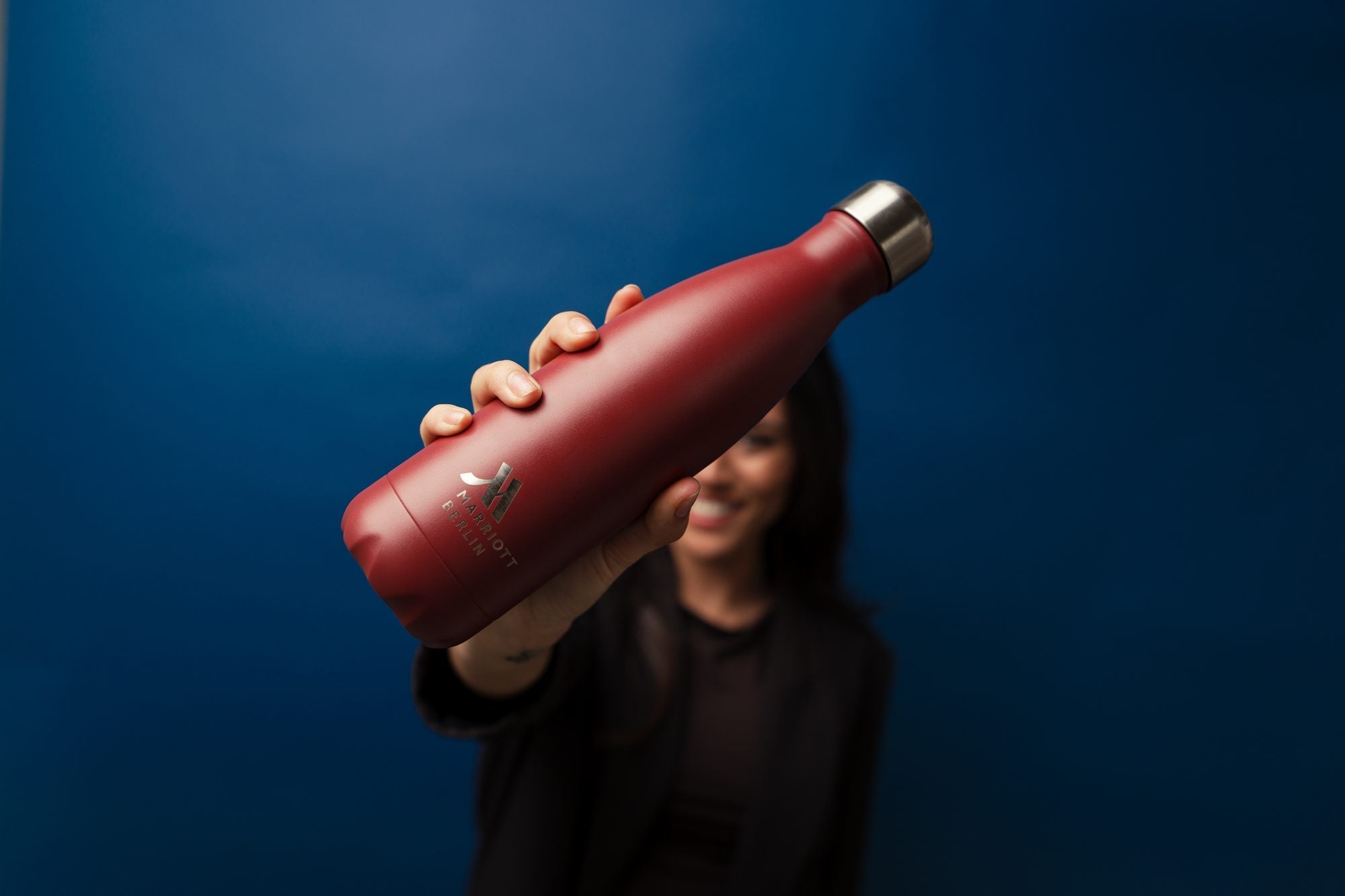
Finding eco-friendly drinkware that fits your office’s daily demands can feel like a balancing act. Sustainability-focused managers across United States, Canada, United Kingdom, Australia, and European markets recognize that material durability and employee preferences matter as much as bold environmental goals. This guide helps you pinpoint practical steps for assessing your team’s drinkware needs, offering actionable strategies to cut waste and strengthen brand credibility with thoughtful choices.
Table of Contents
- Step 1: Assess Your Team’s Drinkware Needs
- Step 2: Identify Key Sustainability Criteria
- Step 3: Explore Eco-Friendly Material Options
- Step 4: Evaluate Supplier Certifications And Policies
- Step 5: Verify Durability And Long-Term Value
- Step 6: Incorporate Branding For Impact
Quick Summary
| Key Point | Explanation |
|---|---|
| 1. Assess your team’s drinkware needs | Evaluate current drinkware use and identify improvement opportunities through an office sustainability audit. |
| 2. Identify key sustainability criteria | Focus on material sourcing, biodegradability, and environmental compliance to select truly sustainable drinkware. |
| 3. Explore eco-friendly material options | Research materials like stainless steel and glass for their environmental benefits and office suitability. |
| 4. Evaluate supplier certifications and policies | Ensure suppliers have certifications like B Corp and ISO 14001 to confirm their environmental commitments. |
| 5. Verify durability and long-term value | Choose drinkware that withstands daily use and reduces waste over time, considering overall lifecycle sustainability. |
Step 1: Assess your team’s drinkware needs
Choosing sustainable drinkware requires a strategic understanding of your office’s unique drinking habits and environmental goals. The process begins with a comprehensive evaluation of your current drinkware usage, tracking consumption patterns, and identifying opportunities for meaningful improvement.
To effectively assess your team’s drinkware needs, start by conducting an office sustainability audit that examines current drinking vessel utilization. This initial investigation involves several key steps:
- Count the total number of drinkware items currently in circulation
- Evaluate existing materials (plastic, ceramic, metal)
- Track average weekly or monthly replacement frequency
- Assess current waste generated from disposable cups or bottles
- Identify departments or teams with highest drinkware consumption
During your assessment, pay close attention to material durability and usage patterns. Some teams might require more robust drinkware for high-traffic areas like conference rooms or shared workspaces, while others might need lightweight options for individual workstations.
Sustainable drinkware selection is not just about replacing items, but about creating a comprehensive strategy that reduces environmental impact while meeting your team’s practical needs.
Consider surveying employees about their preferences, drinking habits, and willingness to adopt more sustainable options. This collaborative approach ensures that your new drinkware meets both environmental standards and user expectations.
Pro tip: Create a simple digital survey to gather employee insights about drinkware preferences and sustainability goals before making bulk purchases.
Step 2: Identify key sustainability criteria
Transitioning to sustainable drinkware requires a nuanced understanding of environmental impact and material performance. Your goal is to develop a comprehensive framework for evaluating drinkware that goes beyond simple aesthetic considerations and focuses on meaningful ecological responsibility.
When assessing sustainability criteria, start by examining compostable cup standards and certifications that demonstrate genuine environmental commitment. Key sustainability indicators include:
- Material sourcing from renewable resources
- Complete biodegradability or compostability
- Minimal carbon footprint during production
- Durability and reusability potential
- Compliance with recognized environmental regulations
Look for third-party sustainability certifications that validate a product’s environmental claims. These might include standards from organizations like B Corp, Green Seal, or specific industry-specific environmental credentials that prove genuine ecological performance.
Sustainability is not just about the end product, but the entire lifecycle of your drinkware from production to disposal.
Beyond material composition, consider the long-term environmental impact of your drinkware choices. This means evaluating not just immediate recyclability, but also the total energy consumed in manufacturing, transportation, and eventual disposal or recycling processes.
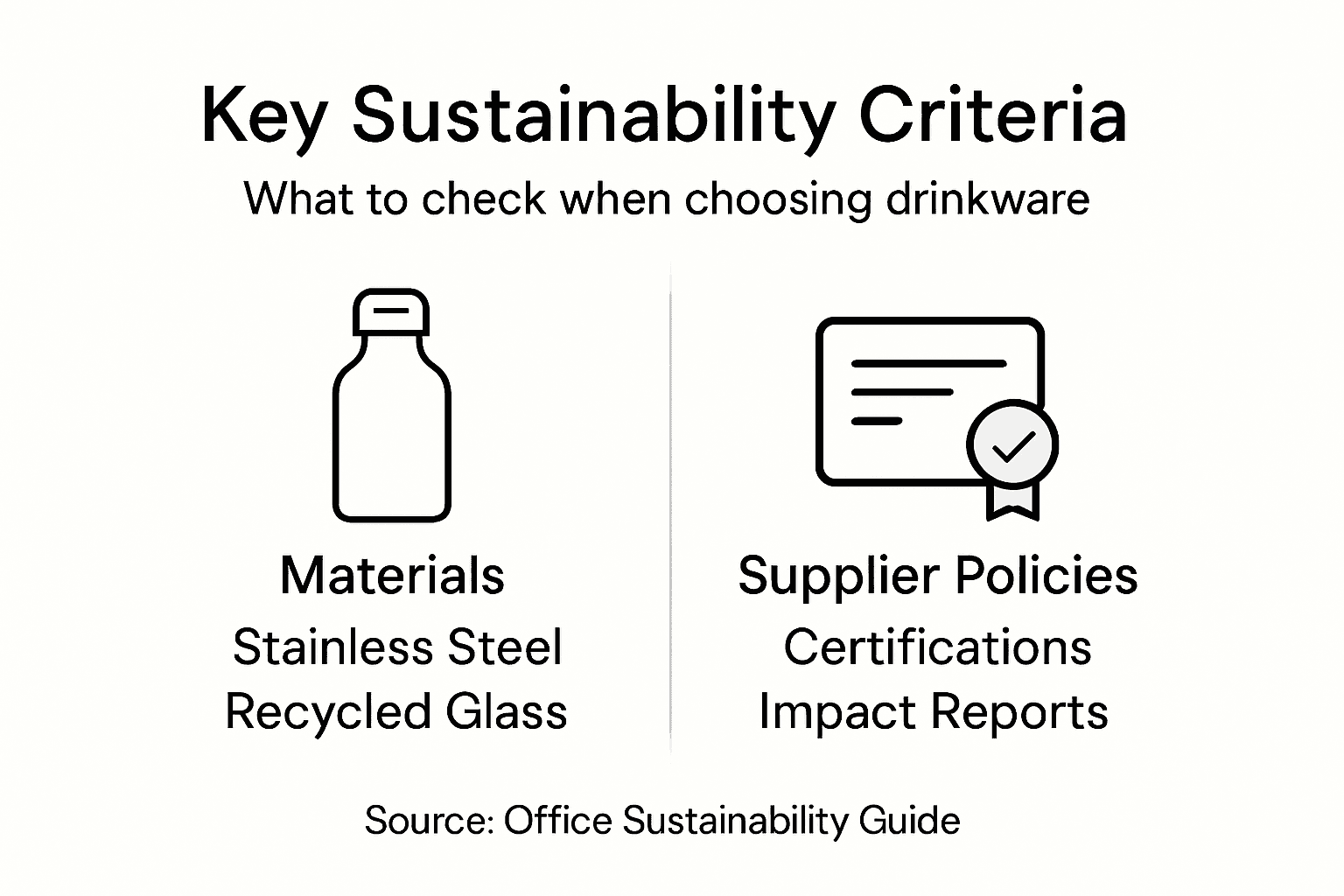
Pro tip: Request detailed environmental impact reports from potential drinkware suppliers to gain deeper insights into their actual sustainability practices.
Step 3: Explore eco-friendly material options
Selecting the right sustainable drinkware material is crucial for minimizing your office’s environmental footprint while maintaining practical functionality. Understanding the unique characteristics of different eco-friendly materials will help you make an informed decision that balances sustainability with performance.
Explore eco-friendly drinkware material tradeoffs that offer various environmental and practical benefits. Your primary material options include:
- Stainless Steel: Highly durable, recyclable, and long-lasting
- Glass: Completely recyclable and chemical-free
- Compostable Materials: Derived from renewable resources like corn and sugarcane
- Silicone: Flexible, reusable, and resistant to temperature changes
- Recycled Plastics: Reduces waste and supports circular economy principles
Each material presents unique advantages. Stainless steel drinkware offers exceptional durability and can withstand repeated use, while compostable options provide a biodegradable alternative that supports waste reduction strategies.

Here’s a quick comparison of sustainable drinkware materials and their practical office benefits:
| Material | Sustainability Advantage | Office Suitability |
|---|---|---|
| Stainless Steel | Extremely durable, fully recyclable | Ideal for shared spaces, lasts decades |
| Glass | 100% recyclable, inert composition | Great for personal use, elegant appearance |
| Compostable Materials | Biodegradable from renewables | Good for events, easy disposal |
| Silicone | Flexible, reusable, temperature resistant | Perfect for travel, spill-proof |
| Recycled Plastics | Diverts waste, supports circular economy | Lightweight, broad color options |
Sustainable drinkware selection is not just about choosing a material, but understanding its entire lifecycle and environmental impact.
Consider the energy consumption, production process, and end-of-life disposal for each material. Some options might require more energy to manufacture, while others offer superior long-term sustainability through repeated use or natural decomposition.
Pro tip: Request material samples from different suppliers to physically compare durability, weight, and feel before making a bulk purchase.
Step 4: Evaluate supplier certifications and policies
Validating a drinkware supplier’s environmental credentials goes far beyond surface-level marketing claims. Your thorough investigation will help ensure that your office’s sustainability goals align with genuine, measurable environmental commitments.
When evaluating potential suppliers, focus on these critical certification and policy elements:
- B Corp Certification: Demonstrates comprehensive social and environmental performance
- ISO 14001 Environmental Management: Indicates structured environmental responsibility
- Carbon Neutral Certification: Proves commitment to reducing carbon footprint
- Sustainable Manufacturing Policies: Transparent documentation of production practices
- Third-Party Environmental Audits: Independent verification of sustainability claims
Environmental transparency is key. Request detailed documentation that outlines the supplier’s entire sustainability approach, including material sourcing, manufacturing processes, and waste reduction strategies.
To help you evaluate drinkware suppliers, consider these key certification impacts:
| Certification | What It Signals | Business Benefit |
|---|---|---|
| B Corp | Rigorous social/environmental performance | Ensures ethical supply chain |
| ISO 14001 | Structured environmental processes | Reduces risk, improves credibility |
| Carbon Neutral | Commitment to zero-carbon footprint | Helps achieve climate goals |
| Environmental Audits | Independent sustainability review | Confirms claims, boosts transparency |
True sustainability is not a destination, but a continuous journey of improvement and accountability.
Pay special attention to suppliers who provide comprehensive environmental impact reports. These documents should include specific metrics on water usage, energy consumption, carbon emissions, and waste generation throughout their production cycle.
Pro tip: Create a standardized sustainability evaluation scorecard to consistently and objectively compare different drinkware suppliers.
Step 5: Verify durability and long-term value
Selecting sustainable drinkware goes beyond initial environmental credentials - it requires a strategic approach to understanding long-term performance and lifecycle sustainability. Your goal is to invest in drinkware that minimizes waste and maximizes utility throughout its entire usage period.
Examine eco-friendly drinkware durability factors that contribute to sustainable office solutions. Critical evaluation metrics include:
- Material Resistance: Ability to withstand daily office use
- Impact Tolerance: Resilience against accidental drops
- Temperature Range: Functionality across different environmental conditions
- Surface Integrity: Resistance to scratching and degradation
- Maintenance Requirements: Ease of cleaning and long-term care
Lifecycle analysis is crucial when assessing drinkware value. Some materials like stainless steel might have higher upfront environmental costs but can last decades, ultimately reducing overall waste compared to frequently replaced alternatives.
Durability is the silent cornerstone of true sustainability - investing in quality means reducing long-term environmental impact.
Pay special attention to warranty terms and replacement policies that demonstrate a manufacturer’s confidence in their product’s longevity. Comprehensive warranties often signal superior product design and commitment to sustainable practices.
Pro tip: Request performance testing documentation and request sample products to conduct your own durability stress tests before making a bulk purchase.
Step 6: Incorporate branding for impact
Branded drinkware represents a strategic opportunity to enhance your company’s sustainability narrative while creating powerful visual communication. Your approach should seamlessly blend environmental responsibility with memorable corporate identity design.
Explore custom drinkware branding strategies that transform everyday office items into meaningful marketing tools. Effective branding options include:
- Laser Etching: Minimalist, durable logo application
- Color Matching: Align drinkware with corporate color palette
- Sustainability Messaging: Highlight environmental commitment
- Employee Recognition: Personalized designs for team members
- QR Code Integration: Link to corporate sustainability initiatives
Design consistency plays a critical role in creating a cohesive brand experience. Choose branding techniques that complement your drinkware’s sustainable materials and reinforce your company’s environmental values.
Branded sustainable drinkware is more than marketing - it’s a tangible representation of your corporate identity and commitment to responsible business practices.
Consider working with designers who understand both graphic design principles and sustainable manufacturing to create impactful, environmentally conscious branded drinkware.
Pro tip: Develop multiple design variants to test employee preferences and engagement before finalizing your corporate drinkware branding strategy.
Discover Sustainable Drinkware Solutions Tailored for Your Office
Selecting the right sustainable drinkware can feel overwhelming with all the factors like durability, material sustainability, and supplier credentials to consider. If you’re aiming to reduce waste, promote long-term value, and elevate your company’s green initiatives with personalized style, FLASKE is here to help. We understand the challenge of balancing environmental impact with practical office needs, offering durable and customizable options that align perfectly with your sustainability goals.
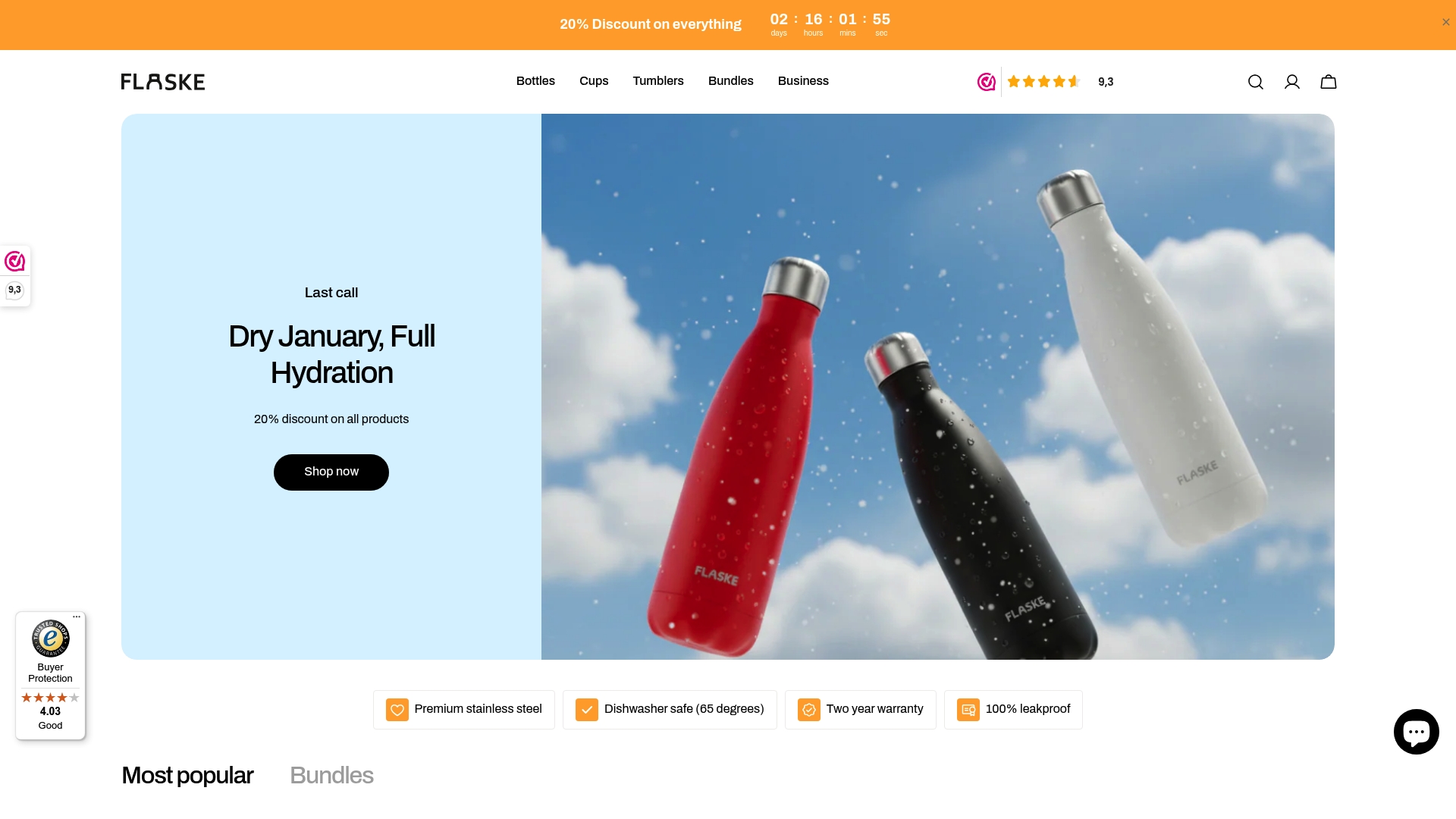
Explore our premium collection of stainless steel Tumblers – Flaske and personalized Cups – Flaske designed for both individual use and collaborative office environments. Every product comes with reliable quality you can trust along with eco-friendly benefits that truly make a difference. Visit FLASKE.com today to find sustainable drinkware that supports your office’s mission and encourages a culture of responsibility now.
Frequently Asked Questions
How can I assess my team’s drinkware needs?
Start by conducting a drinkware audit that counts current items and evaluates materials. Track usage patterns to identify areas for improvement and consult employees on their preferences. This will help you make informed decisions when selecting sustainable options.
What sustainability criteria should I consider when choosing drinkware?
Focus on material sourcing, biodegradability, carbon footprint, and compliance with environmental regulations. Create a checklist of these criteria to evaluate potential drinkware options effectively, ensuring each choice meets your sustainability goals.
What are the best eco-friendly materials for office drinkware?
Consider materials like stainless steel, glass, compostable substances, silicone, and recycled plastics. Each has unique benefits, so weigh factors like durability and recyclability before making a selection that aligns with your office’s needs.
How do I evaluate drinkware suppliers for sustainability?
Look for suppliers with certifications such as B Corp, ISO 14001, and Carbon Neutral status. Request documentation that outlines their sustainability practices, and create a standard scorecard to compare the environmental credibility of different options.
Why is durability important in sustainable drinkware?
Durability affects the overall lifecycle sustainability by minimizing replacements and waste. Assess materials for their resistance to wear and tear, and consider drinksware that can last years to effectively reduce environmental impact.
How can I incorporate branding into our sustainable drinkware strategy?
Utilize techniques such as laser etching or color matching to enhance your corporate identity on sustainable drinkware. Ensure the branding aligns with your commitment to sustainability, making a positive statement about your environmental values.


